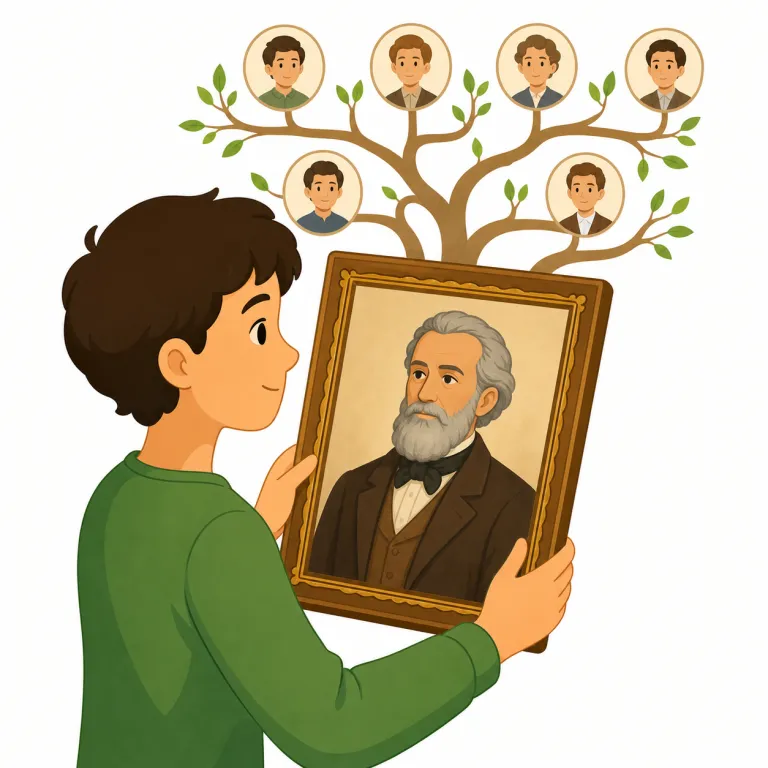
forefather
forefather は英検1級レベルの英単語で、「先祖」という意味があります。発音記号は /ˈfɔrˌfɑðər/ です。
先祖
解説 Definition
過去の世代の祖先、先人。特に遠い過去の先祖や、ある集団や国の最初の世代を指す。
A forefather is a male ancestor from an earlier generation, especially one who is remembered as part of a family's or nation's past. The word is also used more broadly for people who came before and helped shape later ideas or traditions. It often appears in historical, cultural, or formal writing.
覚え方のコツ Memory Tip
forefather は fore「前に」+ father「父」と見れば覚えやすいです。まず「自分より前の世代の father たち」から「先祖」と取るのが基本。fore- は forehead, forefront, before などの「前」の感覚とつなげると定着します。日常の近い家族というより、家系・民族・国家の歴史をさかのぼって語る場面で出やすい語です。ancestor よりやや古風で重みがあり、the forefathers of the nation のように「建国の父祖」「先人たち」の含みでも使われます。
Split it into `fore` and `father`: fathers from before your time. The prefix `fore-` gives the idea of what comes earlier or in front, as in `before` or `forehead`. `Forefather` feels more historical and weighty than everyday family words.
例文
His forefathers came to this country in the 19th century.
彼の先祖は19世紀にこの国にやってきた。
The forefathers of the nation established its founding principles.
その国の建国の父祖たちは、建国の理念を確立した。
She researched her forefathers through genealogical records.
彼女は系譜資料を使って先祖について調べた。
forefather の類義語・関連語
forefather の語源・成り立ち Etymology
forefather は fore「前の・先の」(古英語 fore)+ father「父・祖先」(古英語 fæder)から成るゲルマン系の語です。文字通り「自分より前の父たち」で、そこから先祖を表します。関連語に forebear、fatherly があります。
This word is made from fore, meaning "before," and father, both from Old English. Its literal sense is "fathers from earlier times." From that, it came to mean ancestors in general, not only direct fathers. It is related to forebear and fatherly.
同じレベルの語彙をもっと
英検1級の一覧へ →外部辞書で調べる
この英単語をクイズで覚えよう