荒涼とした、寒々しい
adjective 形容詞建物や風景などが、飾り気がなく寒々として、厳しく不気味な印象を与えるさまを表す。gaunt ruins や a gaunt landscape のように用い、人が痩せ衰えているという既存語義とは異なり、場所の荒涼とした外観をいう。
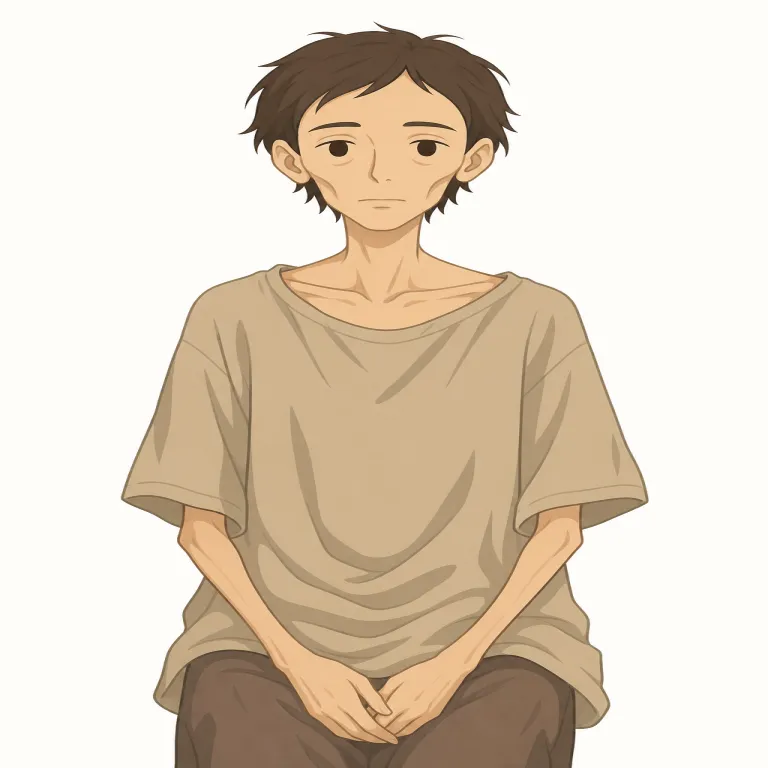
gaunt は英検1級レベルの英単語で、「やつれた」という意味があります。発音記号は /ɡɔːnt/ です。
骨と皮だけのように非常に痩せ細った外観を表します。栄養不足や疲労で憔悴した、やつれた様子です。
Gaunt describes a person who looks very thin, weak, and tired, often because of illness, hunger, or stress. It usually suggests an unhealthy or severe appearance rather than natural slimness. The word is mainly used to describe faces or bodies.
thin や slim は単に細いだけでも言えるが、gaunt は「病気・疲労・飢えで頬がこけ、骨ばって見える」レベルの細さ。healthy さはなく、見た瞬間に“やつれている”と感じる語。gaunt face / gaunt figure / look gaunt の形でまとめて覚えると使いやすい。lean は引き締まった前向きな細さ、skinny は口語的、emaciated はさらに医学的・極端。gaunt はその中間で、文学や描写でよく出る“憔悴した外見”の語として押さえると残りやすい。
`Gaunt` is not just thin like `slim` or `lean`. It suggests a tired, hollow, almost bony look, often from illness, stress, or hunger. Remember the common shapes: `gaunt face`, `gaunt figure`, `look gaunt`.
After the illness, he looked gaunt and weary.
病気の後、彼はやつれて疲れた様子に見えました。
The prisoner's gaunt face showed signs of suffering.
囚人のやつれた顔からは、苦しんできたことがうかがえました。
Winter winds and hunger made the wolf gaunt.
オオカミは冬の寒風と飢えでやつれていました。
文脈によって、次の意味でも使われます。
建物や風景などが、飾り気がなく寒々として、厳しく不気味な印象を与えるさまを表す。gaunt ruins や a gaunt landscape のように用い、人が痩せ衰えているという既存語義とは異なり、場所の荒涼とした外観をいう。
gaunt は中英語 gant にさかのぼる単純語で、さらに古い起源は不詳とされ、接頭辞・接尾辞に分けにくい語です。gauntly や gauntness を見ると、「骨ばってやつれた感じ」という核のイメージが保たれてきたと分かります。
Gaunt goes back to Middle English gant. Its older origin is uncertain, so it is not easily broken into smaller parts. Even so, the word has kept the same central sense for a long time: thin, bony, and worn-looking. Related forms such as gauntly and gauntness show that this image stayed stable in English.
この英単語をクイズで覚えよう