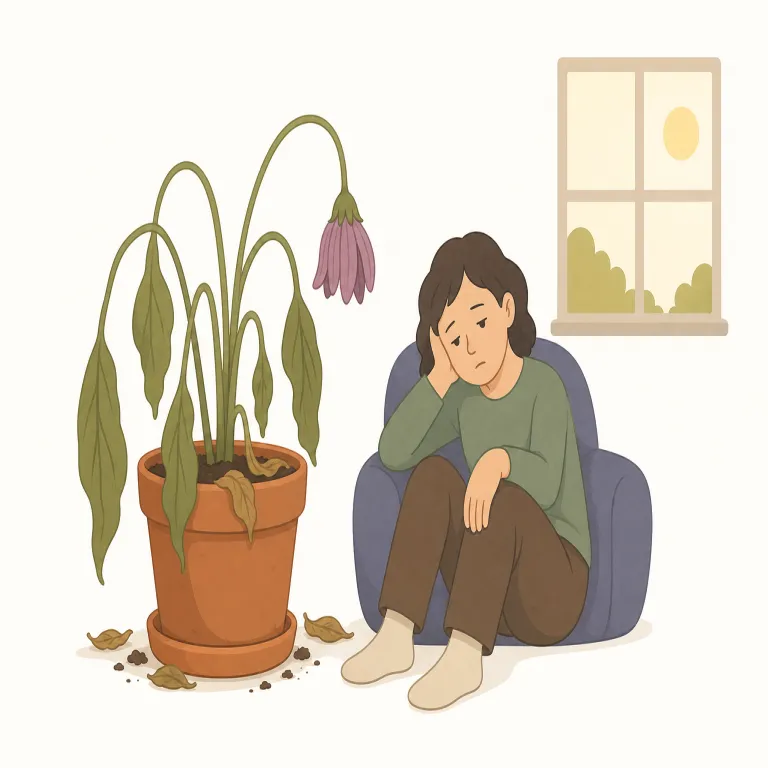
languish
languish は英検1級レベルの英単語で、「衰える、苦境でくすぶる」という意味があります。発音記号は /ˈlæŋɡwɪʃ/ です。
衰える、苦境でくすぶる
解説 Definition
languish は、人や植物が元気を失って衰えること、または計画や事業などが注目や支援を欠いて勢いを失い、停滞することを表す。さらに、人が不自由でつらい状況に長く置かれ、希望を持てないまま苦しむ場合にも使われる。
To languish means to become weak, lose energy, or remain in an unpleasant condition for a long time. It is often used for people, businesses, plans, or prisoners that are not improving. The word suggests slow suffering or lack of progress.
覚え方のコツ Memory Tip
languish は、まず関連語 languid(だるい、活気がない)とセットで覚えると定着しやすい語です。共通して「力が抜け、元気や勢いがしぼんでいる」感覚があります。decline が単に低下する、fade が薄れる寄りなのに対し、languish は「長く放置されて弱っていく」感じが強いのがポイント。plants languish without water, the project languished for months, languish in prison のように、人・植物・計画が苦しい状態でくすぶる場面で結び付けると覚えやすいです。
Link it with `languid`, which means weak, slow, or without energy. Both words carry the feeling of something losing strength for a long time, not just changing a little. Remember common patterns like `languish in prison` or `the project languished for months`.
例文
The plant began to languish without sufficient sunlight and water.
その植物は、十分な日光と水がないため衰え始めた。
The prisoner languished in the cell for years waiting for justice.
その囚人は、正当な裁きを待ちながら、何年も独房で苦しんだ。
After the initial excitement, the project began to languish for lack of funding.
当初の盛り上がりのあと、その計画は資金不足で勢いを失い始めた。
languish の類義語・関連語
類義語
紛らわしい語
languish の語源・成り立ち Etymology
languish は古フランス語 languir、さらにラテン語 languere「ぐったりする」が語源です。languid や languor と同根で、『力が抜けて長く弱る感じ』がそのまま「衰弱する」「元気なくなる」に通じます。
From Old French languir, from Latin languere, meaning "to be weak" or "to grow faint." The word kept the idea of losing strength over time, and in English it came to suggest a slow, tired decline. It is related to English words like languid and languor.
同じレベルの語彙をもっと
英検1級の一覧へ →外部辞書で調べる
この英単語をクイズで覚えよう