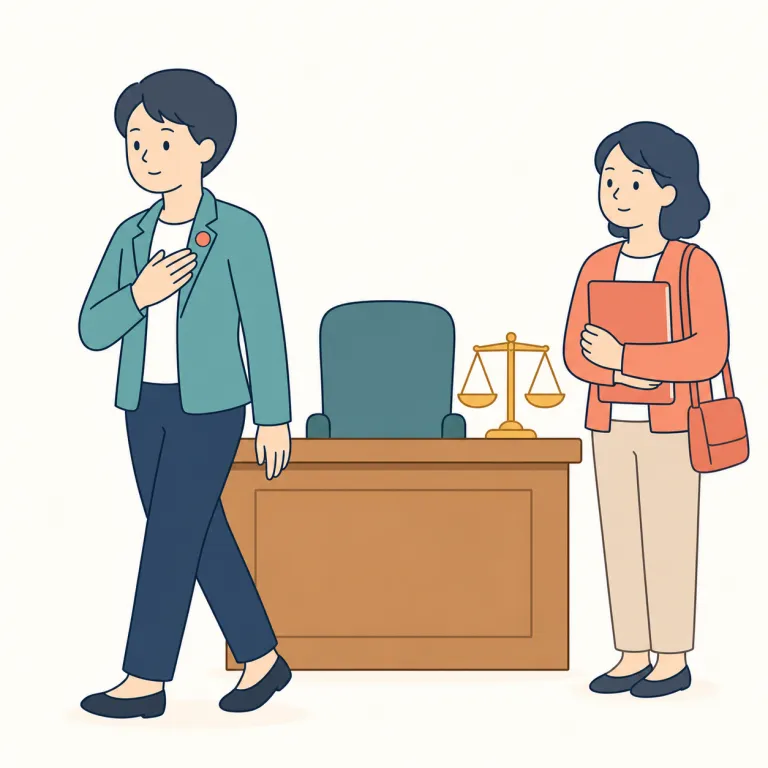
忌避する
解説 Definition
判事や陪審員が特定の事件への参加から自分を除外する法的行為。利益相反や偏見などを理由に事件から身を引く。弁護士など他者が除外を求めることもできる。
To recuse means to remove yourself from making a decision in a case or situation because you may not be fair or neutral. This word is mainly used in legal, political, and official contexts.
覚え方のコツ Memory Tip
まず `recuse oneself from a case` という形で丸ごと覚えると定着しやすいです。judge や juror が、公正さに疑いが出る場面で『この件から自分を外す』ときの語。`excuse` が『免除する・外してもらう』なら、`recuse` はその法廷版と見ると記憶に残ります。`refuse` とつづりが近いですが、こちらは単なる『断る』ではなく、利益相反や偏見を避けるための正式な自己除外。ニュースでは `recuse himself/herself` の形が頻出です。
A strong memory hook is the phrase `recuse oneself from a case`. It often appears with judges or jurors who step away to stay fair. It looks a bit like `excuse`, so you can connect it with formally removing yourself from something.
例文
The judge decided to recuse himself from the case due to conflict of interest.
判事は利益相反を理由に、その事件の担当から身を引くことにした。
A lawyer may ask the court to recuse a biased judge.
弁護士は、偏った判事を忌避するよう裁判所に求めることができる。
The juror had to recuse herself because she knew the defendant.
その陪審員は被告人と面識があったため、陪審員を辞退しなければならなかった。
recuse の類義語・関連語
派生語
紛らわしい語
recuse の語源・成り立ち Etymology
recuse は古フランス語経由でラテン語 recusare に由来し、re-「退ける」+ causa「理由」と考えられます。cause や excuse と同じ核をもち、「理由を示して断る」から、法廷で自ら忌避する意味になったと見ると腑に落ちます。
Recuse came into English through Old French from Latin recusare. It is connected with the idea of refusing or rejecting, likely with a sense of giving a reason for doing so, and it is related in origin to cause and excuse. Over time, the word became specialized in legal use for formally stepping aside or asking not to take part.
同じレベルの語彙をもっと
外部辞書で調べる
この英単語をクイズで覚えよう