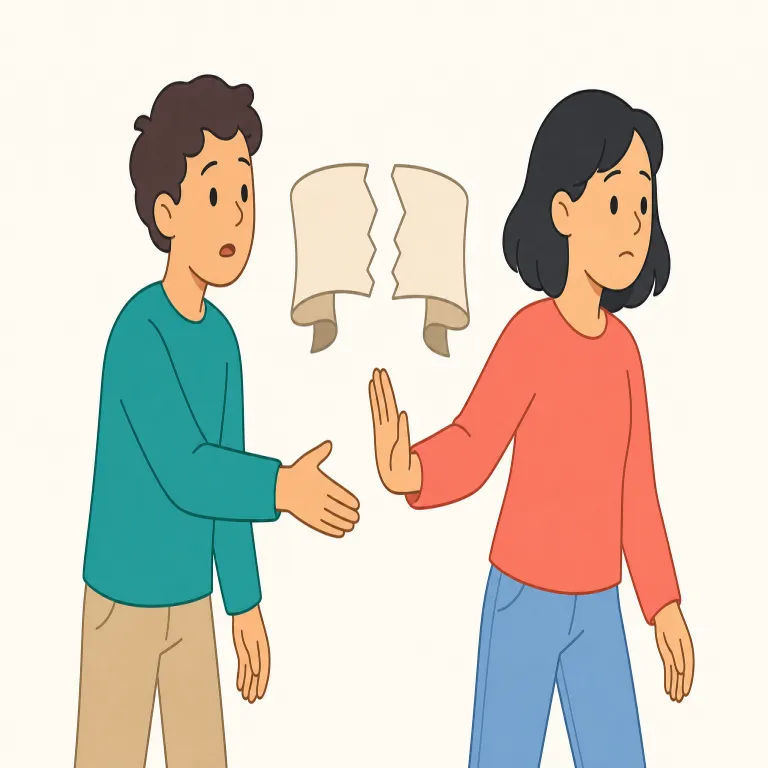
(トランプで)同じスートの札を出さない
verb 動詞トランプゲームで、出されたスートの札を持っているのに別のスートの札を出し、規則に違反することを表します。約束や契約を破るという一般的な用法とは異なる、カードゲーム特有の意味です。
約束や契約を守らないこと。同意した責任や約束を実行しないことを意味します。
Reneging means failing to do what you promised or agreed to do. It is often used for agreements, duties, or plans when someone backs out unfairly. The verb is commonly used with the preposition on, as in reneging on a promise.
まず renege を「いったん yes と言ったのに、後で no に戻す動き」として覚えると残りやすいです。中の neg は negative を知っていれば「否定にひっくり返す」感覚につながります。promise / deal / agreement と相性がよく、renege on a promise(約束を破る)、renege on a deal(取引を反故にする)の形で覚えるのが実用的です。cancel が単に中止するだけなのに対し、renege は一度引き受けた責任や合意を守らない点が核心。reneging はその「約束破りをしていること」です。
Think of someone first saying yes, then changing to no later. The middle part `neg` can remind you of `negative`, which helps with that reversal idea. It is often used with `on`: `renege on a promise` or `renege on a deal`.
He was accused of reneging on his campaign promises.
彼は選挙公約を破ったと非難されました。
The company was penalised for reneging on the contract.
会社は契約を破ったために罰されました。
Reneging on a deal damages trust and relationships.
約束を破ることは、信頼や人間関係を損ないます。
文脈によって、次の意味でも使われます。
トランプゲームで、出されたスートの札を持っているのに別のスートの札を出し、規則に違反することを表します。約束や契約を破るという一般的な用法とは異なる、カードゲーム特有の意味です。
reneging は renege の -ing 形で、語源はラテン語 renegare「否認する・取り消す」。re-「後ろへ」+ negare「否定する」からでき、negative や deny も近い仲間。『いったん認めたことを後で打ち消す』ので、約束を破る意味になった。
Reneging is from renege, which comes from Latin renegare, meaning "to deny" or "to deny again." It is formed from re- and negare "to deny," the same root seen in negative. The sense developed from denying something previously accepted to going back on a promise or obligation.
この英単語をクイズで覚えよう