食肉処理、と畜
noun 名詞食肉を得る目的で、家畜などの動物を殺して処理することを指します。大量の人を残酷に殺す「虐殺」とは対象と目的が異なり、畜産、食肉産業、動物福祉などの文脈で使われます。
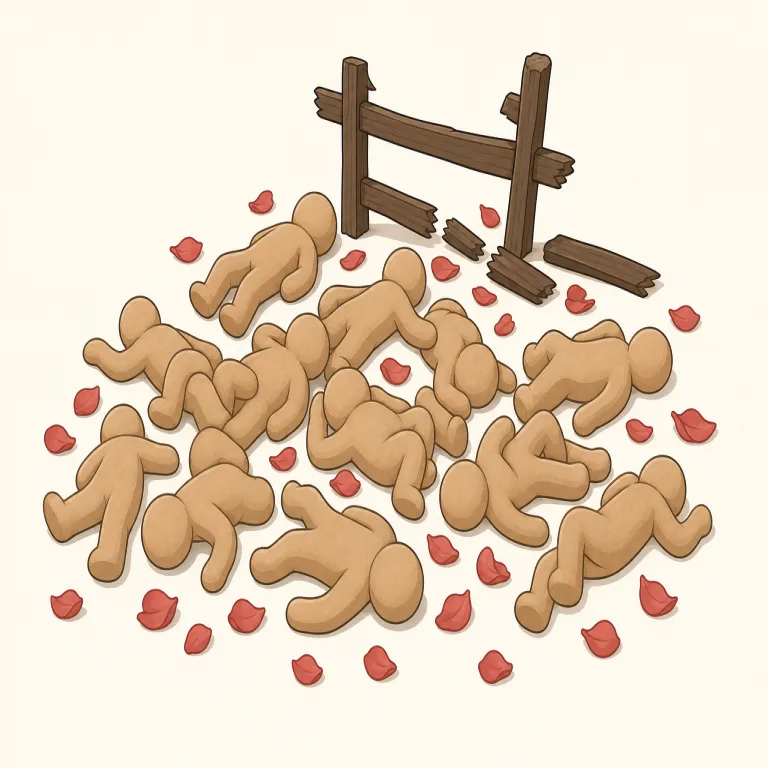
戦争や紛争で大量の人々が無差別に殺害されることです。人命の大量喪失を指す言葉です。
Slaughter is the killing of animals, especially for food, in large numbers. It can also refer to the violent killing of many people or animals, so the word often sounds strong and serious.
slay を知っていると覚えやすい語で、slaughter は「ただ kill する」よりはるかに重く、無差別に大量に殺す生々しさがある。slaughterhouse を見たことがあれば同じ核で、「処理するように殺す」感じまで連想すると定着しやすい。動物の屠殺にも使うので、人については civilians were slaughtered, mass slaughter のように、massacre に近いがもっと血なまぐさく救いのない響きだと整理すると忘れにくい。
Connect it with `slaughterhouse`. That immediately gives you the farming and meat-industry setting. Common combinations like `the slaughter of cattle` or `humane slaughter` help fix the word in a practical context. It is more specific and technical than just `kill`.
The historical slaughter of civilians during the war was horrific.
戦争中の市民への虐殺は恐ろしいものでした。
The international community condemned the slaughter of innocent people.
国際社会は無実の人々への虐殺を非難しました。
The memorial was built to honor those lost in the slaughter.
その記念碑は虐殺で失われた人々に敬意を払うために建てられました。
文脈によって、次の意味でも使われます。
食肉を得る目的で、家畜などの動物を殺して処理することを指します。大量の人を残酷に殺す「虐殺」とは対象と目的が異なり、畜産、食肉産業、動物福祉などの文脈で使われます。
スポーツの試合や競争で、一方が他方に圧倒的な差をつけて勝つことを表すくだけた比喩です。試合そのものを主語にして、接戦ではなく一方的な展開だったことを強調する際に使われます。
slaughter は古ノルド語 slatr「屠殺された肉」に由来するゲルマン系の語です。接頭辞には分かれませんが、もとは「切って殺して肉にする」感覚が強く、単なる kill より生々しい語になりました。slay や manslaughter も近い仲間です。
Slaughter is a Germanic word that comes from Old Norse slatr, meaning slaughtered meat. Its earliest sense was tied to killing animals and cutting them up for meat, which gave the word a harsher feeling than simple kill. It is related in sense and history to words such as slay and manslaughter.
この英単語をクイズで覚えよう