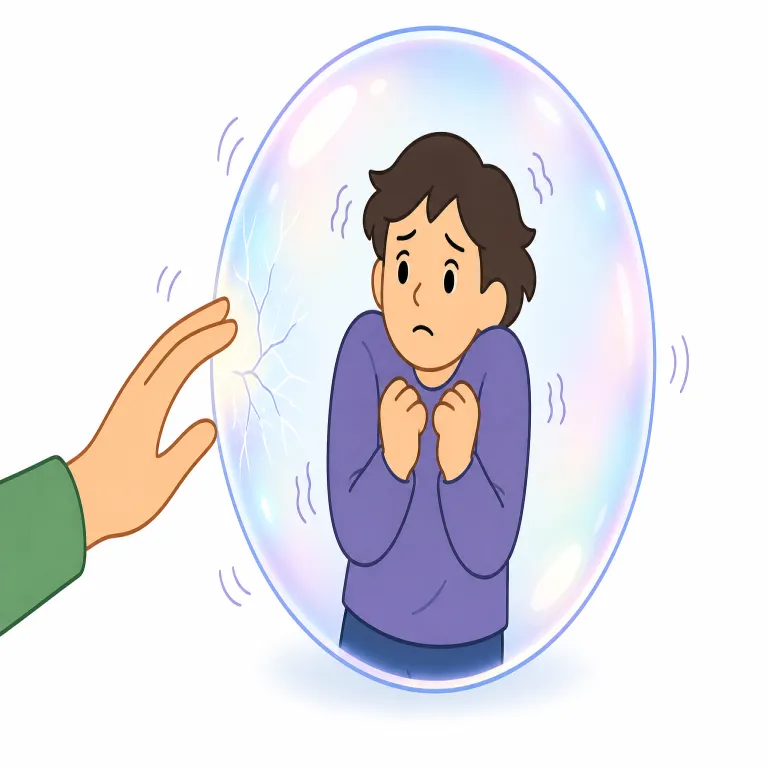
過敏な、反応が鋭すぎる
adjective 形容詞機器や操作装置などが、わずかな接触や入力にも必要以上に反応する性質を表します。touchy controlsやa touchy acceleratorなどの形で使われ、人や話題が扱いにくいという意味とは区別されます。
扱いが難しい、気を使う必要がある。細心の注意が必要な微妙な話題や人を指します。
If someone is touchy, they are easily upset, offended, or annoyed. It is often used for people or topics that need careful handling because a small comment may cause a strong reaction.
touch を知っていれば、「少し触れただけで反応が出る」と考えると覚えやすい語です。ここでの touch は物理的に触るより、感情・立場・神経に触れるイメージ。a touchy person は「すぐ気を悪くする人」、a touchy subject は「触れ方に注意がいる話題」が定番です。sensitive も近いですが、touchy は「不機嫌になりやすく、扱いに気を使う」というニュアンスがやや強め。tricky が「難しい」、touchy は「人間関係や話題の地雷っぽさ」に注意、で分けると残りやすいです。
The easiest way to remember `touchy` is through phrases like `a touchy subject` or `a touchy issue.` Imagine a topic that causes trouble if you even "touch" it a little in conversation. Unlike `tricky`, which is just difficult, `touchy` has an emotional risk.
He's touchy about his appearance and doesn't appreciate comments about it.
彼は自分の外見に神経質で、それについてのコメントは歓迎しません。
The subject of politics is touchy in their family conversations.
政治の話題は彼らの家族の会話では微妙な問題です。
She became touchy when anyone mentioned her past mistakes.
誰かが過去の過ちに触れると、彼女は過敏になった。
文脈によって、次の意味でも使われます。
機器や操作装置などが、わずかな接触や入力にも必要以上に反応する性質を表します。touchy controlsやa touchy acceleratorなどの形で使われ、人や話題が扱いにくいという意味とは区別されます。
touch「触れる」に形容詞化の -y が付いた語で、touch は古フランス語 toucher、さらに俗ラテン語 *toccare にさかのぼります。もとは「少し触れただけで反応する」感じで、そこから「敏感な・神経質な」の意味へ広がりました。関連語は touching, retouch です。
Touchy comes from touch plus the adjective suffix -y. Touch came into English from Old French toucher, from Vulgar Latin toccare. The idea seems to have moved from "easily touched" to "easily affected," which led to the modern sense of being sensitive or easily upset.
この英単語をクイズで覚えよう