
bail
bail は英検2級レベルの英単語で、「保釈金、汲み出す」という意味があります。発音記号は /ˈbeɪl/ です。
意味一覧 (2件)
保釈金
解説 Definition
保釈金は裁判で逮捕・勾留中の被疑者や被告人を条件付きで釈放するために裁判所に預ける金銭です。被告人が裁判に出廷するよう担保する目的で支払われ、出廷しなければ没収されることもあります。通常、裁判所が金額を決め、身元や犯罪の重大さに応じて変わります。
Bail is money paid so that a person accused of a crime can leave jail until their court date. It is used in legal situations to help make sure the person returns for trial. If the person does not return, the money may be lost.
覚え方のコツ Memory Tip
法廷の場面でまとめて覚えると定着しやすい語です。まず `jail`(拘置所・刑務所)と対にして、「`bail` を払うと `jail` から一時的に出られる」と整理すると意味がつかみやすいです。頻出表現は `post bail`(保釈金を納める)、`be out on bail`(保釈中である)。`fine` のような罰金ではなく、出廷を保証するための預け金だと押さえるのがコツです。さらに `jump bail` は保釈中に逃亡すること。`bail out` は救済の意味でも使うので、法廷の `bail` と混同しないよう注意すると記憶に残ります。
Remember it with `jail`: you pay `bail` so someone can get out of jail for a time. Common phrases are `post bail` and `out on bail`, so learn them as fixed chunks. Also keep it separate from `fine`, because bail is money held as a promise, not a punishment.
例文
The court set bail at five thousand dollars.
裁判所は保釈金を5,000ドルに設定しました。
He could not afford bail, so he stayed in jail until the hearing.
彼は保釈金を払えなかったので、公判まで拘置所に残りました。
She paid bail and left jail.
彼女は保釈金を払い、拘置所を出ました。
汲み出す
(意味 2)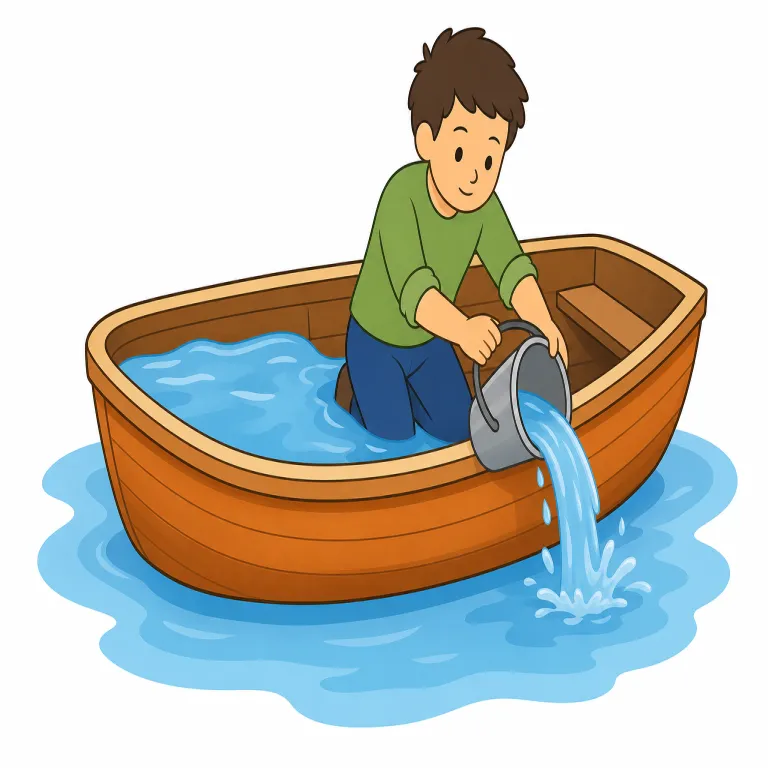
解説 Definition
船やボートなどから水をかき出す、または汲み出す行為。バケツなどの容器を使って浸水を除去する。
To bail means to remove water from a boat or another container, usually by scooping it out. This verb is commonly used in situations where water is entering and needs to be cleared quickly.
覚え方のコツ Memory Tip
まず「boat に water が入ってきて、bucket で外へ出す」場面を丸ごと覚えると定着しやすい語です。bail は単独で暗記するより、bail water out of a boat の形で押さえると意味がぶれません。out と相性がよく、「中にたまったものを外へ出す」動きが核です。bail out が「救い出す」「撤退する」に広がるのもこの発想から。保釈の bail も別義でよく出るので、船・水・バケツの情景があるかどうかで区別すると混同しにくいです。
Link this `bail` to a boat, not to law. Picture someone using a bucket to throw water out of a small boat in a hurry. That image helps with phrases like `bail water` and `bail out the boat`. Unlike `drain`, this feels manual and urgent.
例文
The sailors had to bail out the boat.
船乗りたちはボートから水を汲み出す必要がありました。
We bail water from the leaking canoe.
私たちは漏れているカヌーから水を汲み出します。
He used a bucket to bail water from the ship.
彼はバケツを使って船から水を汲み出した。
bail の類義語・関連語
類義語
対義語
紛らわしい語
bail の語源・成り立ち Etymology
古フランス語 bail(管理・保管)からラテン語 bajulare(運ぶ・管理する)に遡る。裁判所に身柄を「預ける・委ねる」ことが原義で、そこから保釈金の意味に発展した。関連語:bailiff(廷吏)、bailee(受寄者)。人を一時的に「預かる」制度という発想が根底にある。
Bail comes from Old French bail, meaning care, control, or custody, and goes back to Latin bajulare, "to carry" or "to take charge of." In legal use, it first meant placing a person in someone else's keeping. From that, it developed into the modern sense of temporary release secured by money. Related words include bailiff and bailee.
同じレベルの語彙をもっと
英検2級の一覧へ →外部辞書で調べる
この英単語をクイズで覚えよう