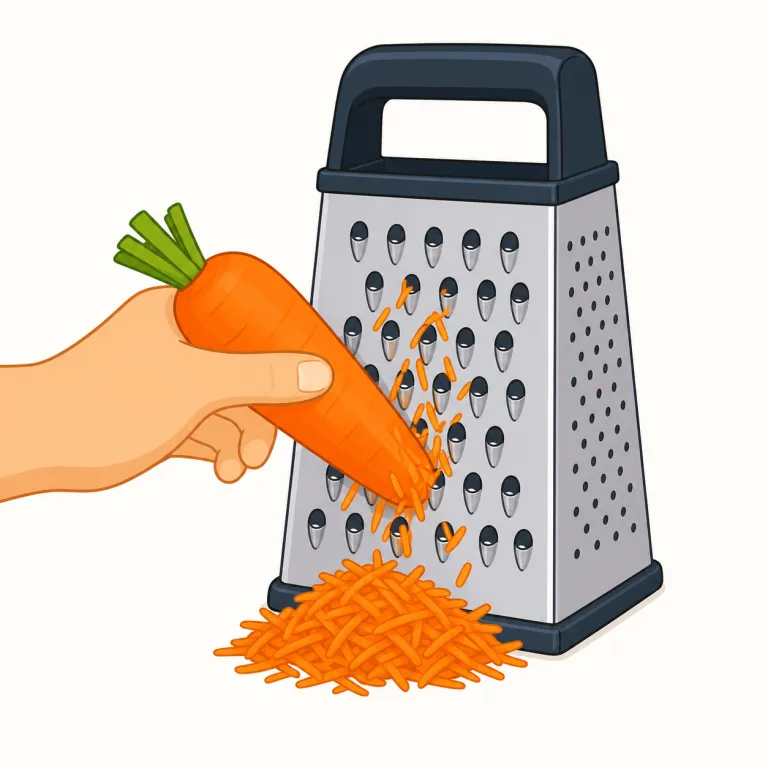
grate
grate は英検準1級レベルの英単語で、「すりおろす、いらだたせる、きしる」という意味があります。発音記号は /ˈɡreɪt/ です。
意味一覧 (3件)
すりおろす
解説 Definition
チーズや野菜などをおろし金で細かく削ることを表す動詞。食材の表面をこすって薄く細かくし、料理に混ぜたり上に振りかけたりするときに使う。調理手順を説明する場面でよく用いられ、食材を手早く細かく加工するニュアンスがある。
To grate means to cut food into very small pieces by rubbing it against a rough surface with holes. It is often used for cheese, vegetables, or spices in cooking. The word can also refer to making a harsh, unpleasant sound or feeling, but the cooking meaning is most common.
覚え方のコツ Memory Tip
grate は料理の定番表現 grate cheese, grate carrot で覚えると定着しやすい。名詞 grater(おろし金)とセットにすると、「道具が grater、動作が grate」という対応が見える。cut のように一気に切るのでなく、表面を何度もこすって細かくする動き。grated cheese の形も頻出。slice は薄切り、chop は刻む、grate はもっと細かく削る感覚。great と1字違いなので、料理文脈で結びつけて判別すると混乱しにくい。
Remember it from cooking phrases like grate cheese or grate carrot. The tool is a grater, and the action is grate, so the two words support each other. It means rubbing food into very small pieces, which is finer than slice or chop.
例文
She grated carrots for the salad.
彼女はサラダ用ににんじんをすりおろした。
Grate some cheese over the pasta before serving.
出す前にパスタの上にチーズを少しすりおろしてください。
He grated fresh ginger into the soup.
彼はスープに生のしょうがをすりおろして入れた。
いらだたせる
(意味 2)
解説 Definition
人の声や態度、繰り返し聞く音などが相手を不快にし、いらだたせるときに使う。物理的に傷つけるのではなく、神経にさわって気分を逆なでする感じが強い。特定の発言や癖がだんだん耐えがたく感じられる場面でよく使う。
To irritate someone through an unpleasant voice, manner, sound, or repeated behavior. It suggests something rubbing against the nerves until it becomes increasingly difficult to tolerate.
覚え方のコツ Memory Tip
grate は「すりおろす」だけでなく、神経をおろし金でこすられるようにいらだつ感覚で覚えると残りやすい。grate on me の形では、声・態度・不満などが何度もこすれて心に引っかかるイメージ。物を細かく削る料理の grate と同じ摩擦感はあるが、ここではチーズではなく nerves が削られる感じ。annoy よりも、耳や神経にざらざら触れて不快になる語感を押さえるとよい。
Imagine an annoying sound or habit rubbing against your nerves like food against a rough grater. The common pattern grate on someone emphasizes irritation that continues or builds over time.
例文
His constant complaints began to grate on everyone in the office.
彼の絶えない不満は、オフィスのみんなをいらだたせ始めた。
The host's mocking tone really grated on me.
その司会者のあざけるような口調は、本当に私の神経にさわった。
After an hour, the repetitive ad started to grate.
一時間もすると、その繰り返し流れる広告はひどく不快に感じられた。
きしる
(意味 3)
解説 Definition
金属どうしがこすれるときのような、きしるようで耳障りな音を立てることをいう。ドア、ブレーキ、声などに使われ、滑らかでなくざらついた不快な響きを表す。単に大きい音ではなく、摩擦を思わせる不快さに焦点がある。
To make a harsh, rough sound like hard surfaces scraping against each other. It is used for things such as doors, brakes, or voices whose sound is unpleasantly uneven.
覚え方のコツ Memory Tip
grate は料理で「すりおろす」と覚えたあと、金属がこすれてギーッと鳴る場面にも広げるとよい。old gate grated なら、門の表面どうしが滑らかに動かず、耳障りにこすれる音を立てる感じ。cheese を削る動作ではなく、door, brake, voice などがざらついて響く音に焦点がある。great と形が近いが、grate は耳にひっかくような不快な摩擦音で区別する。
Picture an old metal gate scraping as it opens and producing a rough, unpleasant noise. Focus on the sound of friction rather than on loudness alone.
例文
The old gate grated as it swung open.
古い門は、開くときにきしる音を立てた。
Her voice grated through the cheap speakers.
彼女の声は安物のスピーカー越しに耳障りに響いた。
The train brakes grated loudly in the station.
駅で列車のブレーキが大きくきしった。
grate の類義語・関連語
grate の語源・成り立ち Etymology
grate は古フランス語 grater「こする・削る」に由来し、その奥にはゲルマン系の「ひっかく」語根が見えます。食材を細かくするのは、刃で切るより表面を何度も擦って削るからで、「すりおろす」がまさに原義どおりです。grater、grating が関連語です。
Grate comes from Old French grater, meaning "to scrape" or "to rub," and it is probably linked to an older Germanic root about scratching. The original idea was not simply cutting, but wearing something down by repeated rubbing. That is how the word came to mean reducing food into small pieces by scraping it against a rough surface, as in grater and grating.
同じレベルの語彙をもっと
英検準1級の一覧へ →外部辞書で調べる
この英単語をクイズで覚えよう