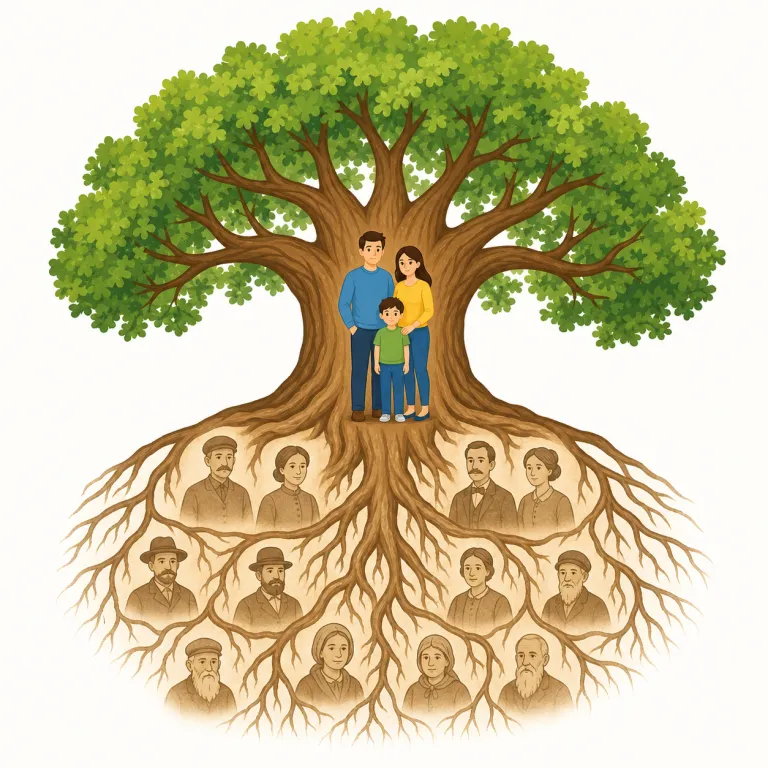
ancestral
ancestral は英検準1級レベルの英単語で、「祖先の」という意味があります。発音記号は /ænˈsɛstrəl/ です。
祖先の
解説 Definition
祖先のという意味で、先祖や過去の世代に関連することを表す形容詞です。家系や家族の歴史、文化的な伝統などを語る際によく使われます。先祖から受け継がれたものや慣習を指すこともあります。
Ancestral means connected with your ancestors or with family members from long ago. It is often used for homes, land, traditions, or objects passed down through generations. The word suggests a strong link to family history.
覚え方のコツ Memory Tip
ancestor(祖先)を知っていれば、ancestr-al で「祖先に関する」と広げると覚えやすいです。-al は natural, cultural などと同じく「〜に関する」を作る形容詞語尾。ancestral home / land / tradition の形で、家・土地・伝統など「代々受け継がれてきたもの」によく付きます。old が単に古いだけなのに対し、ancestral は『先祖からつながる』感じが強い語。ancestor とつづりごとセットで固定すると記憶に残ります。
Start from `ancestor`, then add `-al`, a common ending meaning `related to`. That makes `ancestral` easier to hold in memory as `related to ancestors`. It often appears in set phrases like `ancestral home`, `ancestral land`, or `ancestral tradition`.
例文
She returned to her ancestral homeland after living abroad for many years.
彼女は長年海外で暮らした後、先祖の故郷へ戻った。
The family still follows its ancestral traditions.
その家族は今も先祖代々の伝統を守っている。
This is my family's ancestral home.
ここは私の先祖代々の家です。
ancestral の類義語・関連語
ancestral の語源・成り立ち Etymology
古フランス語ancestreを経て、ラテン語antecessor「先に行く人」にさかのぼる。ante-「前に」+cedere「進む」が核で、precedeやancestorも近い仲間。自分より前を歩いた人々という発想から、「祖先の」という意味が見えてくる。
Ancestral comes through French from a Latin source related to antecessor, meaning "one who goes before." Its parts carry the idea of "before" and "go" or "move," the same pattern seen in words like precede. From the idea of people who went before you, it came to mean "connected with ancestors."
同じレベルの語彙をもっと
英検準1級の一覧へ →外部辞書で調べる
この英単語をクイズで覚えよう