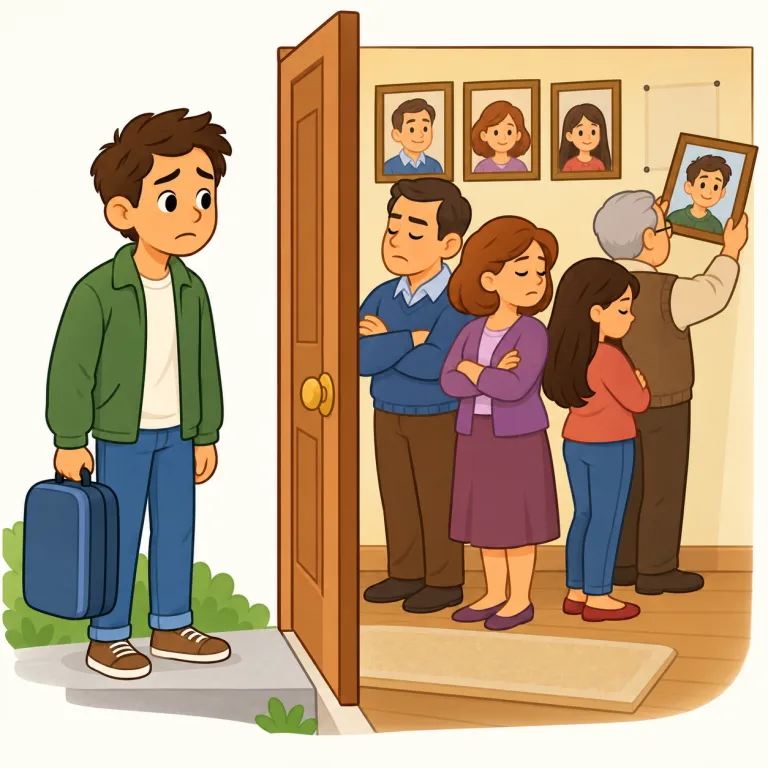
勘当された
解説 Definition
disowned は、家族などから関係を断たれ、勘当された状態を表す形容詞です。disown「縁を切る、勘当する」の過去分詞に由来し、同じ形は動詞の過去形にも使われます。
Disowned describes a person whom a family member or other close relation has formally or decisively rejected and no longer acknowledges as belonging to the family or relationship. It is the past-participial form of disown.
使い方 Usage
使い分け Common distinctions
- estranged は疎遠な状態も表しますが、disowned は家族などが関係を認めないという、より明確な拒絶を示します。 Estranged can describe emotional distance or loss of contact. Disowned suggests a more explicit refusal to acknowledge the relationship.
覚え方のコツ Memory Tip
dis-「否定・切り離し」+ own「自分のものと認める」から、「家族として認めない」と結び付けましょう。disown に -ed が付いた形で、発音は /dɪsˈoʊnd/、語尾は /d/ です。
Connect dis- with rejection or separation and own with acknowledging someone as one's own. Picture a family refusing to recognize someone as a member. Disowned adds -ed to disown and is pronounced /dɪsˈoʊnd/, ending in /d/.
例文
The disowned son later built a quiet life in another city.
勘当された息子は後に別の都市で静かな生活を築きました。
He felt lonely after he was disowned by his family.
彼は家族に勘当された後、孤独を感じました。
disowned の類義語・関連語
disowned の語源・成り立ち Etymology
disowned は dis-「否定・切り離し」と own「自分のものと認める」からできた語で、own は古英語 āgen「自分自身の・所有する」に由来します。原義は「自分のものではないとする」で、そこから「勘当された・縁を切られた」と発展しました。関連語は owner, ownership。
Disowned is the -ed form of disown. Disown combines the negative or separative prefix dis- with own in the sense “acknowledge as one’s own.” Own descends from Old English āgen, meaning “one’s own” or “possessed by oneself.” The verb therefore literally means refusing to recognize someone or something as one’s own, which led to its strong family sense of rejecting or renouncing a relative.
同じレベルの語彙をもっと
外部辞書で調べる
この英単語をクイズで覚えよう