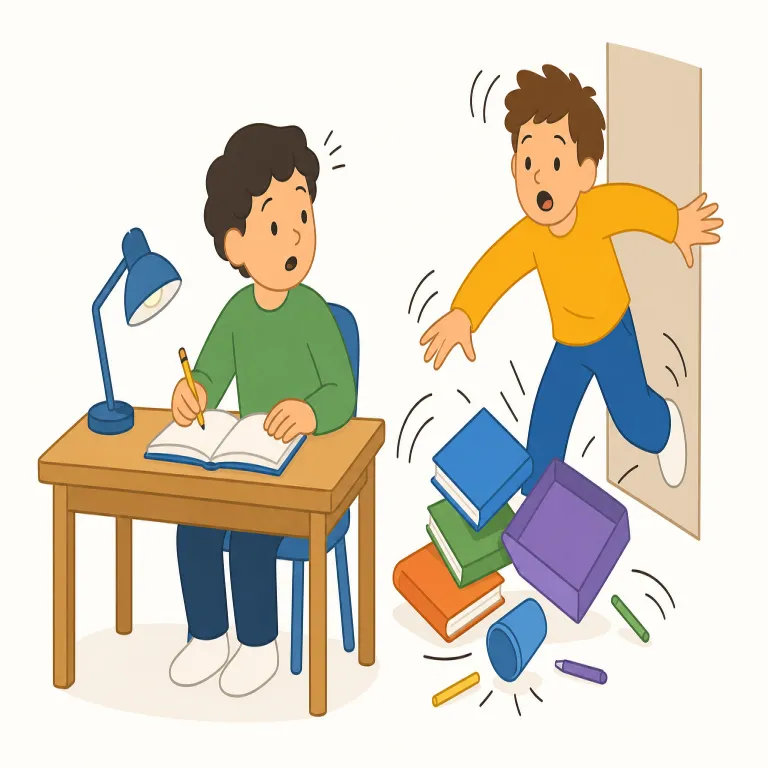
disturb
disturb は英検準2級・TOEIC 600レベルの英単語で、「邪魔する、動揺させる」という意味があります。発音記号は /dɪsˈtɝb/ です。
意味一覧 (2件)
邪魔する
解説 Definition
人の作業や平穏を乱したり、不快な気持ちにさせたりすること。対象の注意や集中をそらして妨げる行為を指します。会話や活動の流れを断ち切るような干渉も含まれます。
To disturb means to interrupt someone, bother them, or stop them from being calm or focused. It is often used when someone is working, resting, or feeling peaceful. It can also mean to make someone worried or upset.
覚え方のコツ Memory Tip
disturb は「落ち着いた状態をくずす」とまとめると覚えやすいです。interrupt が会話や作業を途中で止める感じなのに対し、disturb は相手の平穏・集中・気分を乱すニュアンスが強め。bother よりも、静けさや秩序を崩す響きがあります。don't disturb, disturb sleep, be disturbed by noise のような形でよく出るので、「静かな状態を乱す語」として場面ごと覚えると定着します。
Think of `disturb` as breaking a calm state. It is close to `interrupt`, but `interrupt` stops an action, while `disturb` often ruins peace, sleep, or concentration. Remember common pairs like `Don't disturb`, `disturb sleep`, and `be disturbed by noise`.
例文
Please do not disturb me while I am working.
私が仕事をしている間は邪魔しないでください。
The noise disturbed the entire neighborhood.
その騒音は近所中の人々を不快にさせました。
I did not mean to disturb your rest.
あなたの休息を邪魔するつもりはありませんでした。
えいたんごクイズでの正答率
この語をはじめて出題された 46人 のうち 32人 が正解しました(70%)。
えいたんごクイズの回答から集計した独自データです。1人につき最初に出題されたときの1回だけを数えており、復習や2回目以降の回答、「わからない」と時間切れは含みません。 集計時点は 2026年9月19日 です。
動揺させる
(意味 2)
解説 Definition
人の気持ちや心の平静を乱し、不安やショックを与えるときに使う。悲しい知らせ、気味の悪い場面、心配な事実などが相手を落ち着かなくさせる文脈でよく用いられる。単に作業を邪魔する意味ではなく、感情面を乱す点が中心。
To make someone feel anxious, shocked, or emotionally unsettled. It often describes the effect of upsetting news, troubling facts, or frightening scenes.
例文
The news disturbed her deeply.
その知らせは彼女をひどく動揺させた。
The accident still disturbs me.
その事故のことを思うと、今でも動揺する。
Some scenes in the movie may disturb young children.
その映画のいくつかの場面は幼い子どもを動揺させるかもしれない。
disturb の類義語・関連語
disturb の語源・成り立ち Etymology
disturb は古フランス語を経てラテン語 turbare「かき乱す」に由来し、dis-/de- が加わって「秩序から外して乱す」感じを表します。perturb や turbulence も同根で、静かな状態を崩して落ち着きを失わせるから「邪魔する」になるのです。
Disturb came into English through Old French from Latin disturbare, based on turbare, meaning "to throw into disorder" or "confuse." The prefix dis- or de- added the sense of breaking apart or away from order. Over time, it came to mean upsetting a calm state, which is why it now suggests interrupting peace or regular activity. Related words include perturb and turbulence.
同じレベルの語彙をもっと
英検準2級の一覧へ →外部辞書で調べる
この英単語をクイズで覚えよう