evacuation
evacuation は英検準2級・TOEIC 860・TOEFL 80・IELTS 6.5レベルの英単語で、「避難」という意味があります。発音記号は /ɪˌvækjəˈweɪʃən/ です。
避難
解説 Definition
避難とは、危険から身を守るために安全な場所に移動することです。地震や火災などの緊急時に行われます。
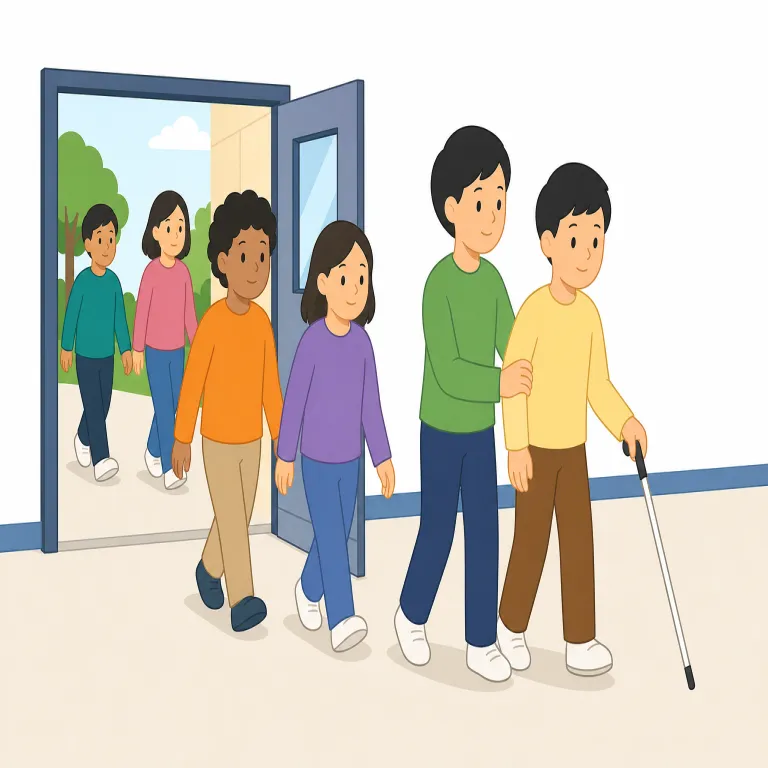
Evacuation is the act of leaving a dangerous place and moving people to safety. It is commonly used in emergencies such as fires, floods, wars, or earthquakes. The word often appears in official instructions and disaster situations.
覚え方のコツ Memory Tip
evacuate(避難させる・避難する)を知っていれば、その名詞形が evacuation です。まずは an evacuation order, emergency evacuation, fire evacuation, evacuation drill のまとまりで覚えると定着しやすいです。感覚は「危険な場所から人を外へ移すこと」。escape が個人の「逃げる」に寄りやすいのに対し、evacuation は建物・学校・地域単位の、指示や計画に基づく避難を表しやすい語です。
Connect it to the verb `evacuate`. `Evacuation` is the noun form, and it often appears in fixed phrases like `evacuation order`, `evacuation drill`, and `emergency evacuation`. It usually sounds more planned and official than simple `escape`.
例文
Evacuation keeps people safe.
避難によって人々の安全が守られます。
Evacuation starts when the fire bell rings.
火災報知器が鳴ると避難が始まります。
During an evacuation, we move outside.
避難するときは、外へ移動します。
えいたんごクイズでの正答率
この語をはじめて出題された 31人 のうち 20人 が正解しました(65%)。
えいたんごクイズの回答から集計した独自データです。1人につき最初に出題されたときの1回だけを数えており、復習や2回目以降の回答、「わからない」と時間切れは含みません。 集計時点は 2026年9月19日 です。
evacuation の類義語・関連語
evacuation の語源・成り立ち Etymology
evacuation はラテン語 evacuare「空にする」が語源で、e-/ex-「外へ」+ vacuus「空の」+ -ation「こと」から成る。vacant や vacuum も同根で、「中を空にする」感覚から人を外へ出す「避難・退避」の意味になった。
"Evacuation" comes from Latin "evacuare," meaning "to empty out." It combines a prefix meaning "out" with "vacuus," meaning "empty," and the noun ending "-ation." From the basic idea of making a place empty, it later came to mean moving people out for safety; related words include "vacant" and "vacuum."
同じレベルの語彙をもっと
英検準2級の一覧へ →外部辞書で調べる
この英単語をクイズで覚えよう