inertia
inertia はTOEFL 100・IELTS 7.5レベルの英単語で、「慣性、惰性」という意味があります。発音記号は /ɪˈnɝʃə/ です。
意味一覧 (2件)
慣性
解説 Definition
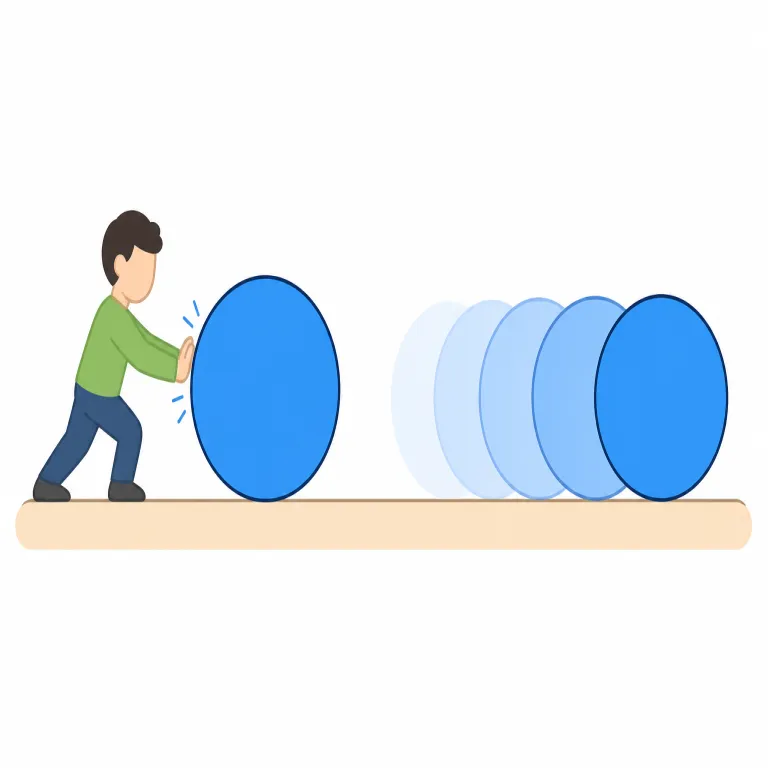
物体が現在の運動状態を保ち続けようとする物理的性質です。ニュートン力学において、外力が加わらない限り物体は静止または等速直線運動を続けます。
Inertia is the tendency of an object to keep its current state unless something changes it. In science, it describes how things stay still or keep moving unless a force acts on them. In general use, it can also mean a lack of energy or unwillingness to change.
覚え方のコツ Memory Tip
inert(動かない・不活発な)を知っていると覚えやすい語です。inertia はその名詞形で、「今の状態を変えにくい性質」とまとめると定着します。物理では、静止しているものは静止のまま、動いているものはその運動を保とうとする、という像で覚えるとよいです。external force が加わって初めて変わる、というセットで押さえるのがコツ。比喩でも organizational inertia のように使われるので、単なる怠けではなく『状態維持に引っぱる力』というニュアンスで覚えると他分野でもつながります。
Link it to inert, which means not active or not moving. Inertia is the noun for that idea: something keeps its present state and resists change. In physics, picture an object staying still or keeping the same motion until a force acts on it. The same image helps in phrases like organizational inertia.
例文
The principle of inertia explains why you lurch forward when a car suddenly stops.
慣性の原理は、車が突然停止したときにあなたが前方に身を乗り出す理由を説明します。
Because of inertia, a moving object keeps moving unless an outside force stops it.
慣性により、動いている物体は外からの力で止められない限り動き続ける。
The spacecraft's inertia kept it moving forward even after the engines shut off.
宇宙船は慣性によって、エンジンが停止した後も前進し続けた。
えいたんごクイズでの正答率
この語をはじめて出題された 38人 のうち 22人 が正解しました(58%)。
えいたんごクイズの回答から集計した独自データです。1人につき最初に出題されたときの1回だけを数えており、復習や2回目以降の回答、「わからない」と時間切れは含みません。 集計時点は 2026年9月19日 です。
惰性
(意味 2)
解説 Definition
変化や行動に対する自然な抵抗感。習慣的に同じ状態を続けようとする傾向。
Inertia is the tendency of something to stay still or continue moving in the same way unless something changes it. In everyday English, it can also mean a lack of energy or willingness to change. It is used both in physics and in more general discussions of behavior or organizations.
覚え方のコツ Memory Tip
まず inert「不活性の・動かない」を知っていると入りやすい語です。inertia は「自分から動き出さず、今の状態を保とうとする力・傾向」。単なる laziness より、『変化への抵抗』が核です。物理の「慣性」と同じ発想で、習慣・組織・気分にもそのまま使えます。overcome inertia で「惰性を断ち切る」、institutional inertia で「組織が変わりにくい」。momentum が勢いを前に進める語なのに対し、inertia は変化を鈍らせる側だと対比すると定着しやすいです。
Link it to `inert`, which means not active or not moving. `Inertia` is the force or habit that keeps things in the same state instead of changing. It is useful to remember as the opposite of `momentum`: momentum pushes forward, inertia resists movement.
例文
The company suffered from inertia and refused to modernize.
その会社は惰性に陥り、近代化を拒みました。
His inertia prevented him from pursuing his dreams.
惰性に流されて、彼は夢を追うことができませんでした。
We must fight our natural inertia to achieve progress.
進歩を遂げるには、変化を避けようとする自然な傾向と戦う必要があります。
inertia の類義語・関連語
inertia の語源・成り立ち Etymology
inertia はラテン語 inertia に由来し、in-「ない」と ars/art-「技術・働き」を合わせた語です。inert や art、artisan と同じ根があり、もとは「動く力や働きがないこと」を表しました。そこから物体が状態を変えたがらない「慣性」という意味へ進んだと分かります。
Inertia comes from Latin inertia, formed from in- "not" and a root linked to skill or activity, seen in art and artisan. It first meant lack of ability, action, or energy. Later, in science, it came to mean the tendency of a body to resist change in its state of motion or rest.
同じレベルの語彙をもっと
TOEFL 100の一覧へ →外部辞書で調べる
この英単語をクイズで覚えよう