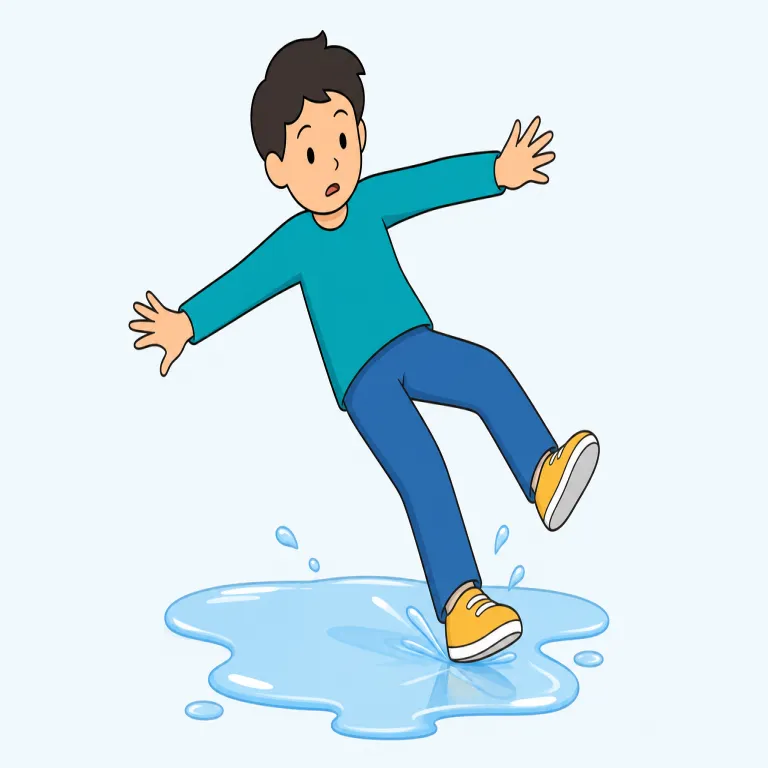
slippery
滑りやすい、つかみどころのない、信用しにくい
解説 Definition
表面がつるつるして滑りやすいという基本義のほか、人や説明がつかみどころなく、はっきりしない、信用しにくいという比喩的な意味でも使う。道路や床の状態にも、責任を避ける発言や油断ならない人物の性質にも用いられる。
If something is slippery, it is hard to hold, stand on, or control because it is smooth, wet, or oily. The word is often used for floors, roads, fish, or other surfaces. It can also describe a person or idea that is difficult to understand clearly or trust.
覚え方のコツ Memory Tip
まず簡単な動詞 slip「すべる」を確実に思い出すと、slippery は「すべる感じのあるもの」とつながる。slippery road / floor のように、足や手が安定しない場面でよく使う。さらに「つかもうとしても定まらない」という感覚から、人や説明にも広がり、a slippery politician なら「言い逃れが多く信用しにくい人」。単に smooth「なめらか」より、危なさ・逃げやすさまで含む語として覚えると残りやすい。
Start with the easy verb `slip`. `Slippery` is the adjective for something that makes you slip, like a `slippery road` or `slippery floor`. The same feeling extends to people or explanations that are hard to hold onto, so the word can also suggest someone hard to trust.
例文
The path gets slippery after it rains.
雨の後はその小道が滑りやすくなる。
The witness gave a slippery answer and avoided the main question.
その証人は質問をはぐらかし、肝心な点を避けました。
The slippery businessman never gives a clear answer.
その油断ならない実業家は、決してはっきり答えません。
slippery の類義語・関連語
slippery の語源・成り立ち Etymology
slippery は古英語 slipor「つるつるした」に、形容詞を作る -y が加わった語。語幹 slip- は「すべる」で、slip や slipper と同根だから、「足場を保てない性質」がそのまま「滑りやすい」になったと見える。
Slippery comes from Old English slipor, meaning "smooth" or "hard to keep hold on," with the adjective ending -y added later. It is related to slip and slipper, all from the same Germanic root about sliding. The idea stayed close to the original sense: something that makes you lose your footing easily.
同じレベルの語彙をもっと
外部辞書で調べる
この英単語をクイズで覚えよう