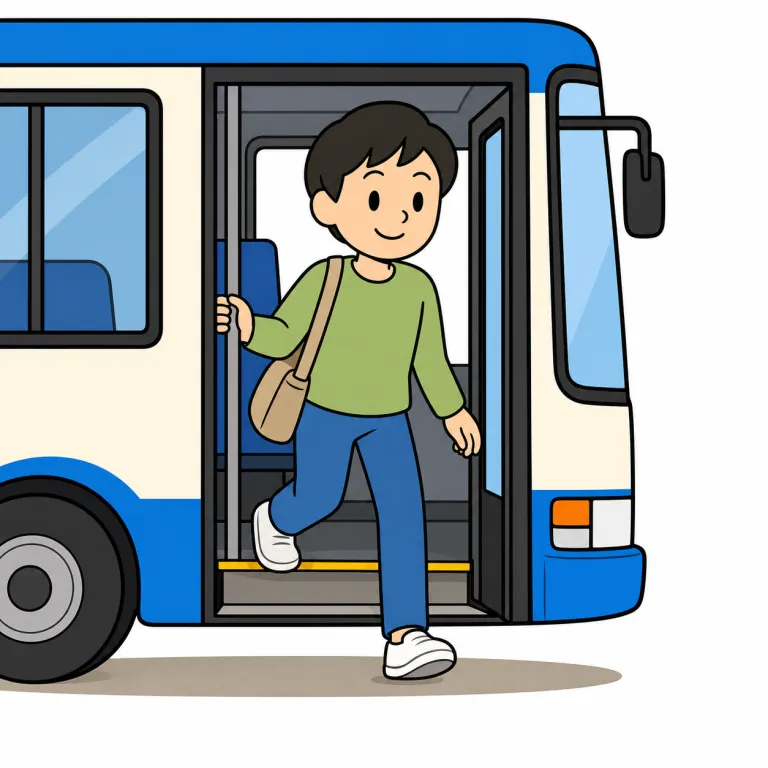
get off
get off は英検3級レベルの英熟語で、「降りる、仕事を終える、切る、離れる、軽く済む」という意味があります。発音記号は /ˈɡɛt ˈɔːf/ です。
意味一覧 (4件)
降りる
解説 Definition
バスや電車などの乗り物から降りること。
This phrasal verb means to leave a bus, train, plane, or other form of transport after riding it. It can also mean to stop touching something or to finish work in some contexts, but the transport meaning is the most common for learners. It is often used with places or stops.
覚え方のコツ Memory Tip
off は「離れて」の感覚なので、get off は「乗り物という場所から離れる」と捉えると覚えやすいです。反対は get on「乗る」で、on/off の対比でセットにすると定着します。特に bus, train, plane など公共交通機関でよく使い、get off the bus / get off at Shibuya の形が頻出です。車なら get out of the car が自然になりやすい点も一緒に押さえると混同しにくくなります。
Off gives the idea of moving away from something. So get off is easy to link with leaving a bus, train, or plane. Remember it as the opposite pair of get on and get off.
例文
I get off the bus.
私はバスを降ります。
We get off at school.
私たちは学校で降ります。
She gets off the train.
彼女は電車を降ります。
えいたんごクイズでの正答率
この語をはじめて出題された 31人 のうち 28人 が正解しました(90%)。
えいたんごクイズの回答から集計した独自データです。1人につき最初に出題されたときの1回だけを数えており、復習や2回目以降の回答、「わからない」と時間切れは含みません。 集計時点は 2026年9月19日 です。
仕事を終える
(意味 2)
解説 Definition
勤務や授業など、その日に予定されていた仕事や活動が終わって自由になることを表す。特に get off work の形で何時に仕事が終わるかを言うときに多く、職場で今日は早く上がれるのような感覚をカジュアルに伝える。
To finish your working hours and become free to leave. This informal expression is often used to ask when someone's workday ends or say that they can leave early.
覚え方のコツ Memory Tip
off は「離れて」の感覚なので、get off work は「仕事の場・勤務状態から離れる」と捉えると覚えやすいです。乗り物から降りる get off the bus と同じ off ですが、ここでは bus ではなく work から離れて自由になるイメージ。What time do you get off work? は「何時に仕事が終わるの?」。early をつけると「早く上がる」の感じになります。
Think of off as moving away from your working duties and becoming free for the day. Learn get off work as a unit, and connect get off early with finishing work before the usual time.
例文
What time do you get off work today?
今日仕事は何時に終わるの?
I got off early, so I went to the gym.
早く仕事が終わったので、ジムに行った。
She usually gets off at six.
彼女はたいてい6時に仕事を終える。
切る、離れる
(意味 3)
解説 Definition
電話を切ることや、インターネット・SNS・ゲームなどから離れることを表す。通話を終える場面にも、オンライン上での利用をやめる場面にも使え、get off the phone や get off the internet の形が典型的。少しうんざりして離れる響きが出ることもある。
To end a phone conversation or stop using the internet, social media, or a game. It can express a wish to leave an ongoing activity, sometimes with a feeling of irritation.
覚え方のコツ Memory Tip
off は「離れて」の感覚なので、get off the phone / internet は「電話やネットにつながっている状態から離れる」と捉えると覚えやすいです。乗り物から降りる get off と同じ off でも、ここでは画面や通話から降りるように離脱するイメージ。Please get off the phone. なら「電話を切って」。get off the internet は「ネットをやめる」と押さえると定着します。
Picture yourself moving away from a call or screen that has been holding your attention. Connect get off the phone with ending a call and get off the internet with stopping your online activity.
例文
Please get off the phone and help me.
電話を切って手伝って。
He told the kids to get off the internet and come to dinner.
彼は子どもたちにネットをやめて夕食に来るよう言った。
I need to get off social media for a while.
しばらくSNSから離れないといけない。
えいたんごクイズでの正答率
この語をはじめて出題された 30人 のうち 24人 が正解しました(80%)。
えいたんごクイズの回答から集計した独自データです。1人につき最初に出題されたときの1回だけを数えており、復習や2回目以降の回答、「わからない」と時間切れは含みません。 集計時点は 2026年9月19日 です。
軽く済む
(意味 4)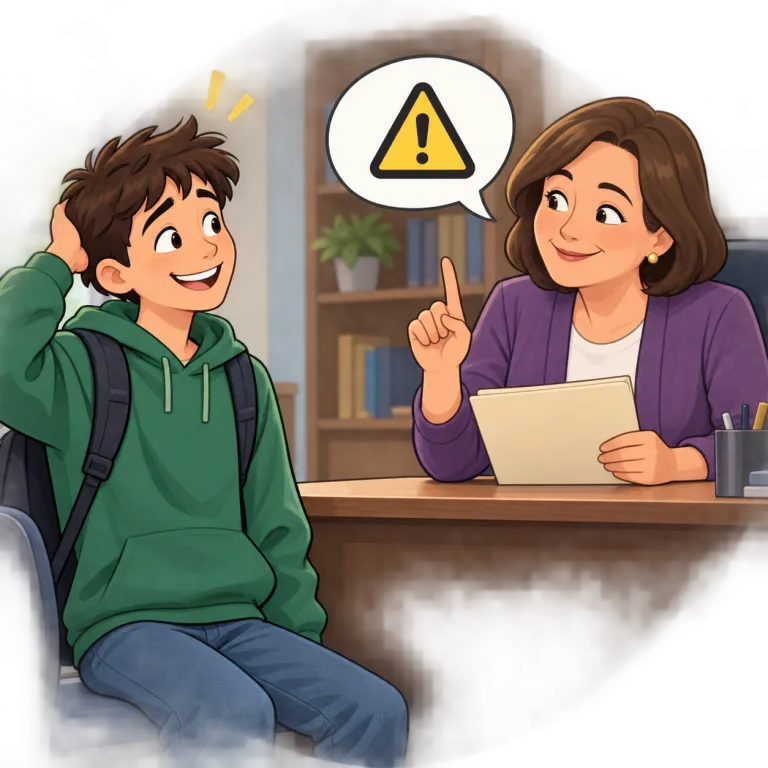
解説 Definition
罰や処分を受ける場面で、予想より軽い罰で済んだり、まったく罰せられず無罪になったりすることを表す。法廷だけでなく、学校や家庭で注意だけで終わる場面にも使える。with a warning や easy を伴うと、処分の軽さが強調される。
To avoid punishment or receive a lighter penalty than expected. This can describe a court case or an everyday situation in which someone receives only a warning.
覚え方のコツ Memory Tip
off は「離れて」の感覚なので、get off は「罰や責任の上に乗せられそうな状態から離れて逃れる」と考えると覚えやすいです。乗り物から降りる意味ではなく、処分の重みから off になるイメージ。get off with a warning は「警告だけで済む」、get off easy は「軽く済む」。証拠不十分で罪を免れる場面にも使えます。
Imagine moving away from the weight of a punishment. Remember get off with a warning for receiving only a warning, and get off easy for receiving a light penalty.
例文
He got off with a warning.
彼は警告だけで済んだ。
The defendant got off because there wasn't enough evidence.
被告は証拠不十分で無罪になった。
You can't keep cheating and getting off easy.
ずるをして毎回軽い罰で済むわけにはいかない。
get off の類義語・関連語
対義語
get off の語源・成り立ち Etymology
get offはget+off。getは古ノルド語geta「得る・到達する」、offは古英語of「離れて」で、「ある場所や乗り物から離れる」が核のイメージなので、自然に「降りる」という意味になる。関連語はbeget、forget。
`Get off` is formed from `get` and `off`. `Get` comes from Old Norse `geta`, while `off` comes from Old English and carries the idea of moving away or apart. The phrase first suggested reaching a position away from something, and this naturally developed into the sense of leaving or getting off a vehicle.
同じレベルの語彙をもっと
英検3級の一覧へ →外部辞書で調べる
この英熟語をクイズで覚えよう