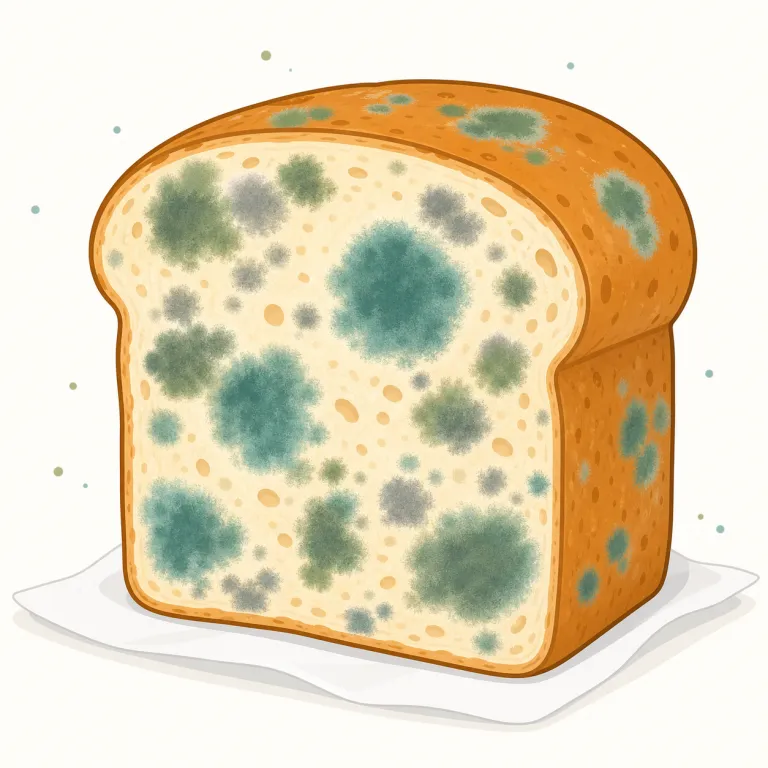
古臭い、陳腐な
adjective 形容詞考え、冗談、作品などが古びて新鮮味を失っていることを、ややくだけて否定的に表す。実際にカビがあるという意味ではなく、時代遅れで面白みがないという比喩的な用法である。
カビが生えた、またはカビに覆われた状態を表す形容詞です。湿度が高い環境で発生したカビが表面を覆っている様子を表現し、食品が腐敗して食べられない状態を指すこともあります。
Moldy means covered with mold or starting to grow mold because of age or moisture. It is often used for food, walls, clothes, or other objects kept in wet conditions. It can also suggest a bad smell or something unhealthy.
mold(カビ)+ -y「〜っぽい」で、まず形から覚えると定着しやすい語。名詞 mold を知っていれば「カビっぽい→カビの生えた」と自然に取れる。old や stale は「古い・新鮮でない」だけだが、moldy は表面に実際にカビが見える感じが強い。moldy bread, moldy cheese, a moldy smell のように、食べ物や湿った場所のにおいと一緒に出やすい。musty は「かび臭い」、moldy は「カビそのものが生えた」に寄りやすい。
See `mold` + `-y`. If `-y` means “full of” or “like,” then `moldy` gives the image of something covered with mold. It is stronger than just `old` or `stale`, because it suggests you can really see or smell the mold.
The old bread became moldy after a few days.
古いパンは数日後にカビが生えた。
We had to throw away the moldy cheese.
カビの生えたチーズを捨てなければならなかった。
The basement smells moldy during the humid season.
地下室は湿度の高い季節にカビ臭い。
文脈によって、次の意味でも使われます。
考え、冗談、作品などが古びて新鮮味を失っていることを、ややくだけて否定的に表す。実際にカビがあるという意味ではなく、時代遅れで面白みがないという比喩的な用法である。
moldy は mold「かび」に形容詞語尾 -y が付いた語で、mold は古ノルド語 mygla などゲルマン系の「かびる」に通じます。mildew と同じく湿気でじわじわ覆う感覚が核にあり、単に古いのでなく「表面に菌が広がった状態」だと見えます。
Moldy comes from mold with the adjective ending -y. Mold is Germanic in origin and is related to words for mold or mildew in Old Norse and other northern languages. The idea is of something becoming covered little by little, which is why moldy describes a surface affected by fungal growth; compare mildew.
この英単語をクイズで覚えよう