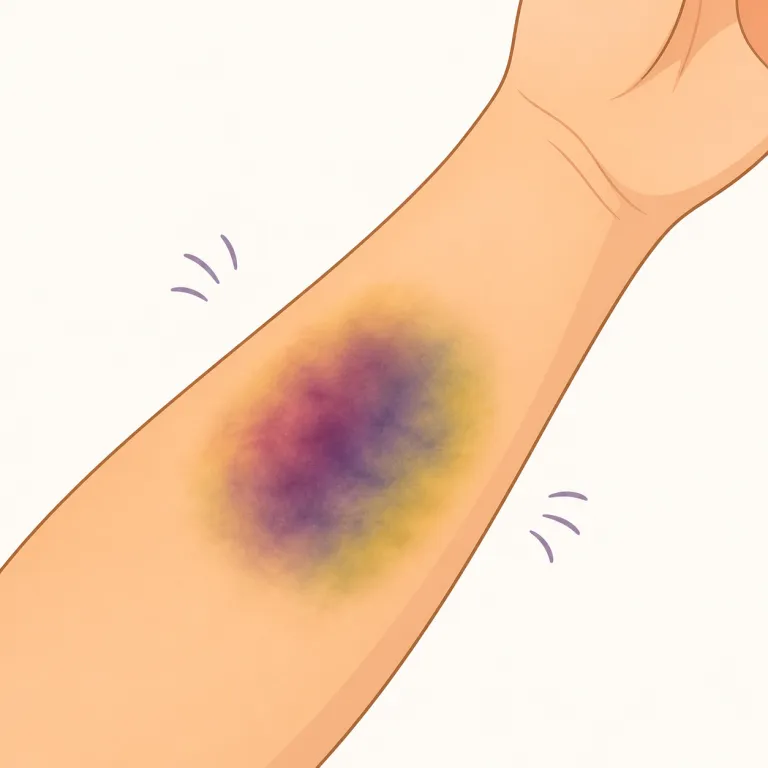
bruise
bruise は英検1級レベルの英単語で、「あざ、打撲する、あざができる」という意味があります。発音記号は /bruːz/ です。
意味一覧 (2件)
あざ
解説 Definition
打撲により皮膚が青紫色に変色した跡のこと。転倒や衝撃によってできた傷や痕を指します。
A bruise is a dark mark on the skin caused by an injury that damages blood vessels under the surface. It often appears after being hit or falling, and it may feel sore. The word can also be used as a verb meaning to cause such a mark.
覚え方のコツ Memory Tip
bruise は「ぶつけたあとに残る青あざ」の場面ごと覚えると定着しやすい語です。cut が「皮膚が切れた傷」、scar が「治ったあとに残る跡」なのに対し、bruise は皮膚は破れず中でダメージが出て色が変わる感じ。get a bruise, have a bruise, a bad bruise の形でよく出ます。動詞でも同形で bruise your knee のように使えるので、「ぶつける→あざになる」を1セットで覚えると忘れにくいです。
Picture the common scene: you bump your knee, the skin does not break, but the color changes later. That is a `bruise`, different from a `cut` or a `scar`. It also works as a verb, so `bruise your knee` and `get a bruise` can be remembered together.
例文
She had a large bruise on her arm from the fall.
彼女は転倒して腕に大きなあざができていた。
The boxer's face was covered with bruises after the match.
試合後、そのボクサーは顔中にあざができていた。
The bruise on his leg gradually faded over two weeks.
彼の脚のあざは2週間の間に徐々に消えていった。
打撲する、あざができる
(意味 2)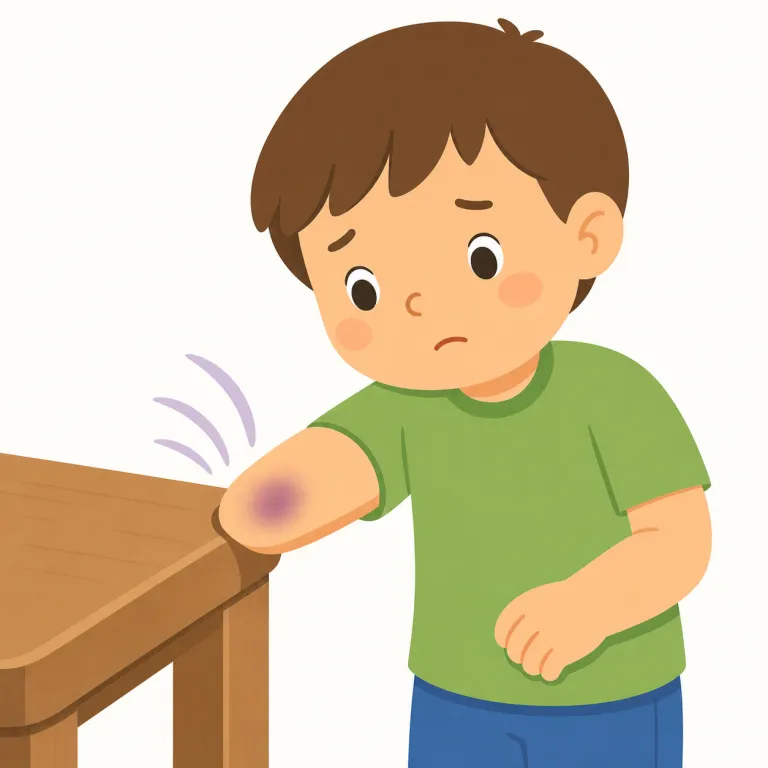
解説 Definition
体の一部をどこかにぶつけて内出血させたり、ぶつかった結果としてその部分にあざができたりすることを表す動詞。日常会話では、転倒したり物に強く当たったりして、ひざや腕などを打って痛める場面でよく使う。人の体だけでなく、果物などが押されて表面が傷む場合にも使える。
This verb means to injure part of the body with a blow or pressure, causing bleeding and discoloration beneath unbroken skin. It can also describe damaging fruit by pressing or knocking it.
例文
I bruised my knee when I fell off my bike.
自転車から落ちて膝を打撲した。
Her arm bruised badly after the game.
試合の後、彼女の腕にはひどいあざができた。
Be careful not to bruise the apples in the bag.
袋の中のリンゴを押して傷めないように気をつけて。
bruise の類義語・関連語
類義語
bruise の語源・成り立ち Etymology
bruise は古フランス語 bruisier「砕く・打ち壊す」に由来し、強く打って組織が傷むことを表しました。そこから皮膚の下が“つぶれて”色が変わる「あざ」の意味になり、語源を知ると見た目より「内側の損傷」が中心の語だと分かります。関連語に bruise, bruised があります。
Bruise comes from Old French bruisier, meaning "to break," "crush," or "smash." The original idea was damage caused by a blow. Over time, it came to refer especially to the mark left when flesh is injured under the skin, so the word keeps the sense of inner crushing rather than surface cutting.
同じレベルの語彙をもっと
英検1級の一覧へ →外部辞書で調べる
この英単語をクイズで覚えよう