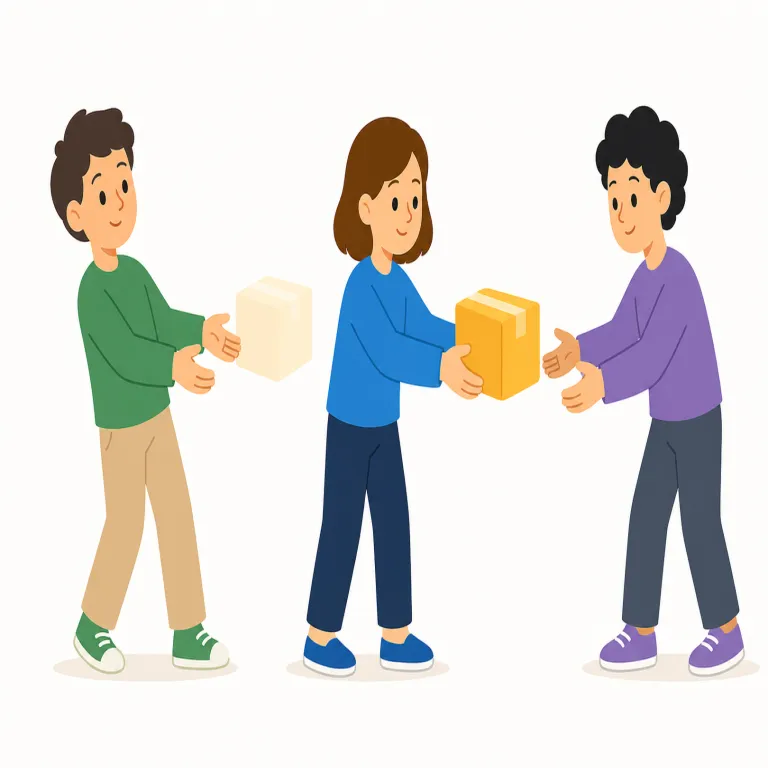
pass on
pass on は英検準1級・TOEIC 600レベルの英熟語で、「伝える、亡くなる、断る、見送る、回す、譲る」という意味があります。発音記号は /ˈpæs ˈɑːn/ です。
伝える
解説 Definition
情報や伝言を他の人に伝えること。次の人に渡す意味で使う。
To pass on means to tell or give information to another person. It is often used when someone receives a message, request, or piece of news and then shares it with someone else. It can also suggest that the speaker is not the original source of the information.
覚え方のコツ Memory Tip
pass は「手渡す・回す」の基本感覚がある語。ball を pass するのと同じで、情報や伝言も自分のところで止めず、on「先へ」回すと考えると覚えやすい。つまり pass on は「次の人に回して伝える」。tell が単に「言う」なのに対し、pass on は「受け取った内容を別の相手へ伝達する」響きが強い。pass the message on, pass on the news, pass it on to her などで固めると定着しやすい。なお pass on には「亡くなる」の意味もあるので文脈に注意。
Think of `pass` in sports: you do not keep the ball, you send it to the next person. `On` adds the idea of moving forward, so `pass on` is like sending news or a message along. It often appears in phrases like `pass on the message` or `pass it on to her`.
例文
Could you pass on this message to your manager for me?
このメッセージをあなたのマネージャーに伝えてもらえますか。
She passed on the recipe to her daughter.
彼女はそのレシピを娘に伝えた。
Parents pass on their values and traditions to the next generation.
親は自分の価値観や伝統を次の世代に伝える。
亡くなる
(意味 2)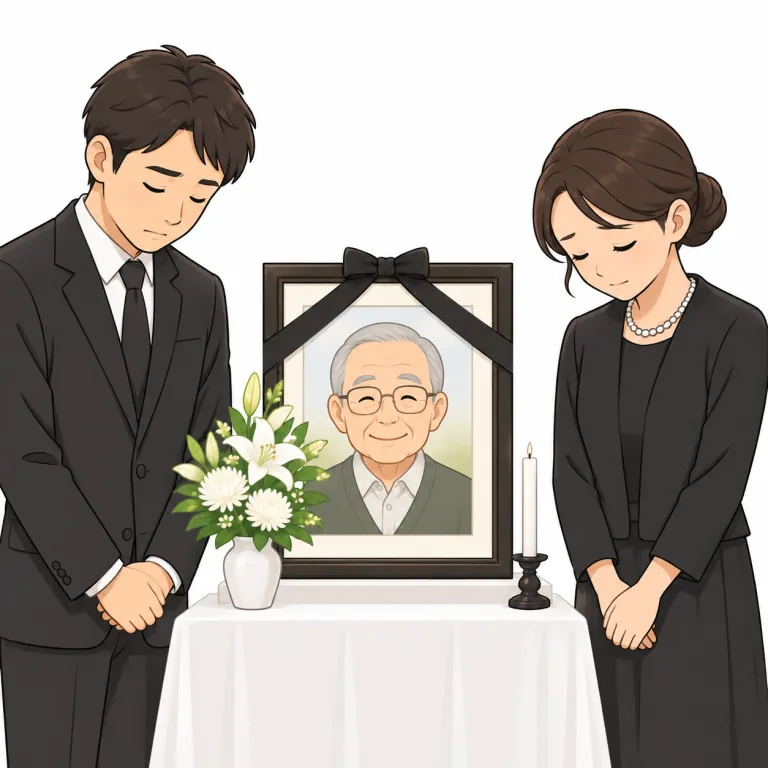
解説 Definition
pass on は人が亡くなることを、die よりやわらかく遠回しに言う表現です。家族や知人の訃報、年配の人について丁寧に述べる場面でよく使われます。日常会話でも使えますが、軽い話題にはあまり向きません。
To die, expressed in a gentle and indirect way. It is often used when respectfully discussing the death of a relative, friend, or older person.
覚え方のコツ Memory Tip
pass は「通り過ぎる・進む」の基本感覚がある語。on は「さらに先へ」なので、pass on は人が今いる場所や人生の段階を静かに通り過ぎ、先へ行くと考えると「亡くなる」という婉曲表現が覚えやすいです。伝言を pass on する意味では情報を次の人へ回すが、この行では人の命がこの世から先へ移る言い方。die より直接的でないので、Her grandfather passed on peacefully. のような丁寧な訃報で使います。
Pass suggests moving beyond a place, while on suggests continuing farther ahead. Together, pass on can present death gently as moving beyond one's present stage of life.
例文
Her grandfather passed on last winter.
彼女の祖父は昨冬に亡くなった。
He passed on peacefully at home.
彼は自宅で安らかに亡くなった。
Many fans were saddened when the actor passed on.
その俳優が亡くなり、多くのファンが悲しんだ。
断る、見送る
(意味 3)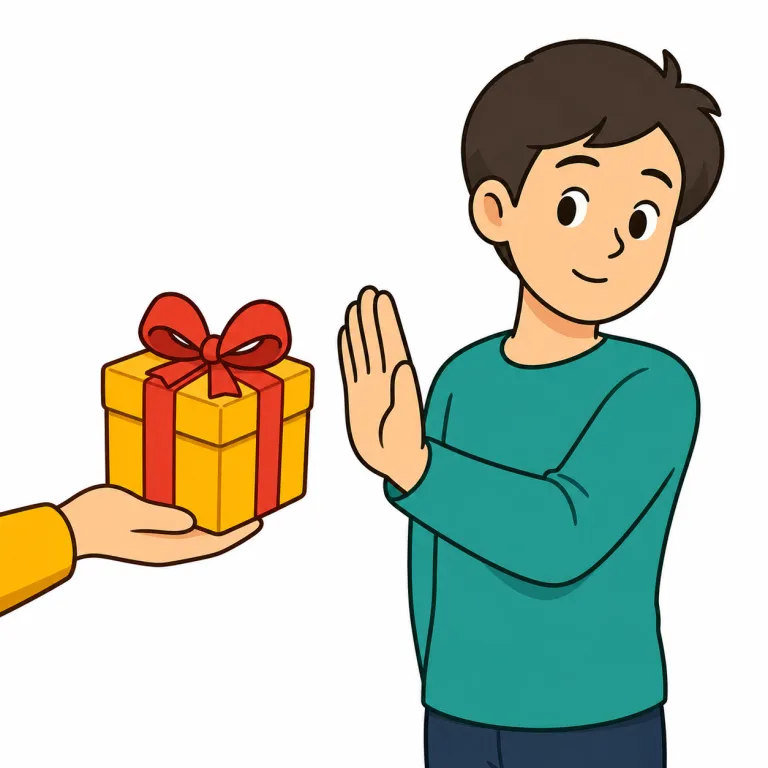
解説 Definition
pass on は食べ物、誘い、提案、機会などを受けずに断る、今回は見送るという意味で使われます。強い拒絶というより、今は要らないので控えるという穏やかな響きがあります。offer や invitation などと一緒に会話でよく使われます。
To politely decline food, an invitation, an offer, or an opportunity. It usually suggests choosing not to accept something this time rather than rejecting it strongly.
覚え方のコツ Memory Tip
pass は「通り過ぎる・やり過ごす」の感覚でも使える語。目の前に来た dessert や offer を受け取らず、そのまま先へ通すと考えると覚えやすい。つまり pass on は「今回は受けずに見送る」。強く reject するというより、I'll pass on dessert tonight. のように「遠慮しておく」柔らかい響きがある。伝言を pass on する意味は「先へ回す」だが、この語義では「自分は取らずに通過させる」と切り分けると混同しにくい。
Imagine letting an offer continue past you without taking it. In this sense, pass on has the gentle feeling of saying, “Not this time,” rather than strongly rejecting something.
例文
I'll pass on dessert tonight.
今夜はデザートを遠慮しておく。
She passed on the job offer after thinking it over.
彼女はよく考えた末、その仕事のオファーを見送った。
We decided to pass on the invitation this time.
今回はその誘いを断ることにした。
回す、譲る
(意味 4)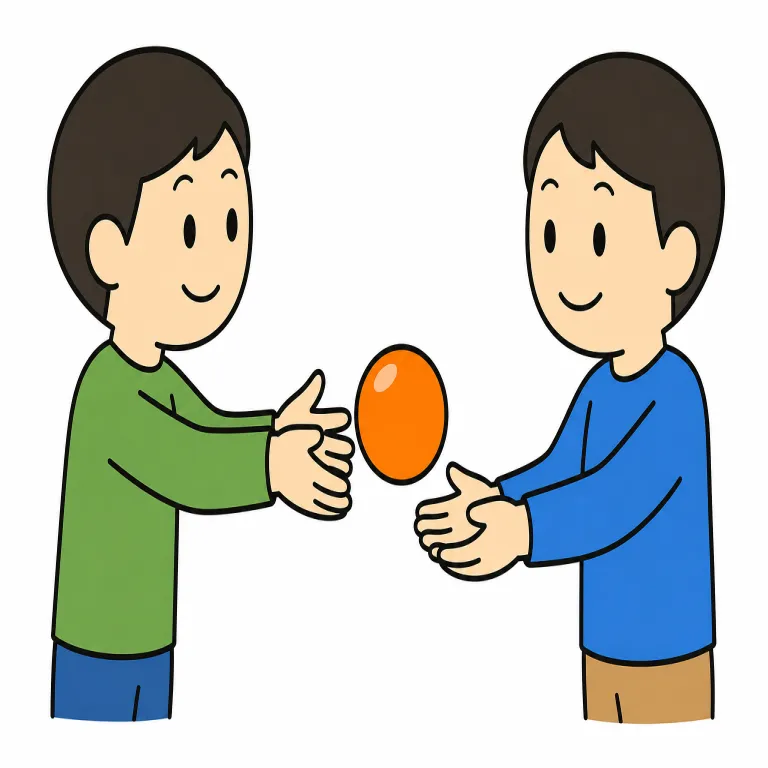
解説 Definition
この pass on は内容を伝達することではなく、品物、権利、順番などを次の人に回す、譲る、受け渡すことを表します。自分で持ち続けず他者へ引き継ぐ動きに焦点があり、書類の回付や形見を家族へ渡す場面などでよく使われます。
To give or transfer an object, right, or responsibility to another person instead of keeping it. It often describes handing something to the next person or leaving something to a family member.
覚え方のコツ Memory Tip
pass は「手渡す・回す」の基本感覚がある語です。on は「先へ」なので、pass on は自分のところで止めず、品物や権利を次の人へ回す・譲る動きを表します。pass the papers on, pass the book on, pass a ring on to someone のように、受け取ったものを次へ渡す場面で覚えると定着します。伝言を回す意味や「亡くなる」の意味もありますが、ここでは物や権利を次の相手へ受け渡す感覚が中心です。
Think of pass as handing something over and on as moving it farther ahead. Picture receiving an object and then passing it on to the next person rather than keeping it.
例文
Please pass the papers on to the next person.
その書類を次の人に回してください。
He passed the family ring on to his daughter.
彼は代々受け継がれてきた指輪を娘に譲った。
When you're done with the book, pass it on.
その本を読み終えたら、次の人に回して。
pass on の類義語・関連語
類義語
対義語
pass on の語源・成り立ち Etymology
passは古フランス語 passer、さらに俗ラテン語 passare「一歩進む」にさかのぼり、onは古英語 on「先へ」。情報をその場で止めず次の人へ進ませる感覚から、pass on は「伝える・受け渡す」になった。同根語に passage、surpass がある。
`pass` came into English through Old French *passer*, from Late Latin *passare*, meaning "to step" or "move along," and `on` comes from Old English. The core idea is not stopping something but moving it forward to the next person or stage. That is how `pass on` came to mean handing over or communicating something. Related English words include `passage` and `surpass`.
同じレベルの語彙をもっと
英検準1級の一覧へ →外部辞書で調べる
この英熟語をクイズで覚えよう