time
意味一覧 (4件)
時間、時刻
解説 Definition
名詞の time は、時計が示す「時刻」と、何かに費やす「時間の長さ」の両方を広く表す基本語。待ち合わせ、締め切り、移動、勉強など日常の予定管理で中心的に使われ、抽象的な時間そのものにも広がる。
As a noun, time is a basic word that can mean both the exact point shown on a clock and the length of a period spent doing something. It is central in everyday life when we talk about meetings, deadlines, travel, study, and other kinds of schedules. It can also refer more broadly to time as an abstract idea.
覚え方のコツ Memory Tip
time は「流れる量としての時間」と「時計が示す時刻」の両方を表す基本名詞です。語源は古英語 tima で、限られた期間の感覚が核です。spend time, save time, on time, at the same time などで頻出します。hour は60分という単位、moment は一瞬、period は区切られた期間を指し、time は最も広く使える土台の語です。
Remember that odds is usually used as a plural noun. In betting or sports predictions, odds show the ratio of how much you can get back if a result happens, as in odds of 5 to 1 or betting odds. Stake means the money you risk, and winnings means the money you receive, so odds refers to the condition or rate of the payout, not the money itself.
例文
What time does the train leave?
その電車は何時に出ますか。
I need more time to finish this report.
この報告書を終えるには、もっと時間が必要です。
Over time, small daily habits can make a big difference.
時間がたつにつれて、毎日の小さな習慣が大きな違いを生むことがあります。
計時する
(意味 2)解説 Definition
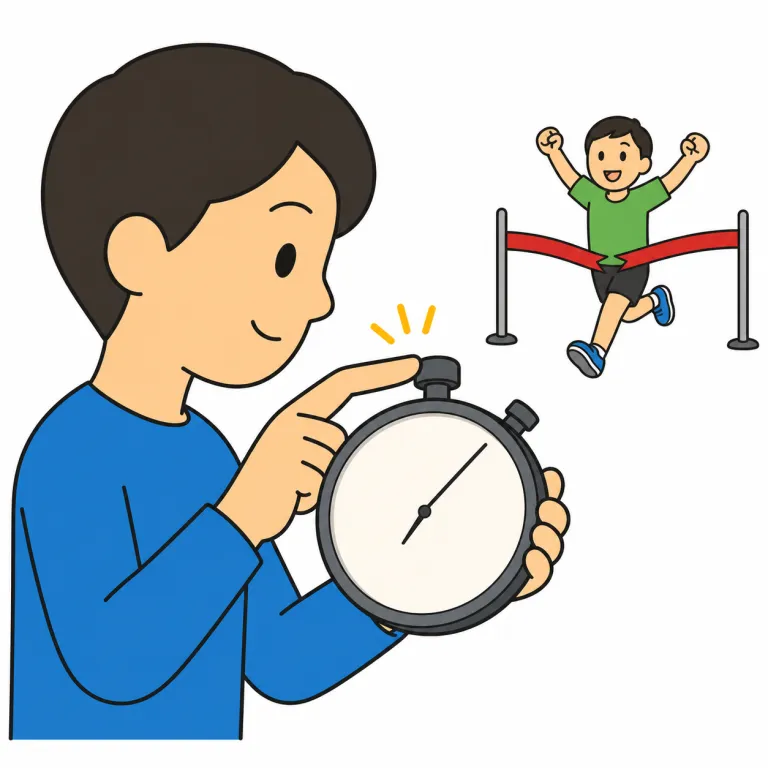
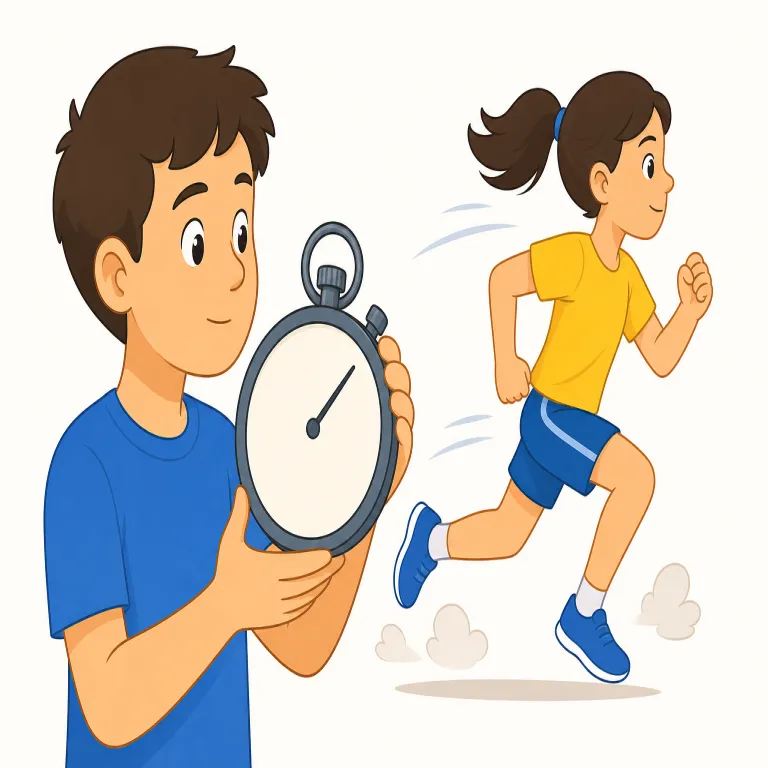
競技や作業にかかった時間を、時計や機器を使って正確に測る意味で使う。スポーツ、実験、料理などで所要時間や速度を記録したい場面に多い。単に時間があるという意味ではなく、経過時間を客観的に数値化する動作を表す。
覚え方のコツ Memory Tip
名詞の time「時間」をそのまま動詞化した語だと考えると覚えやすいです。意味は「時間を見る・測る」で、stopwatch で所要時間を計る場面を思い浮かべると定着します。time a race, time a runner, time how long it takes の形が頻出で、「何をどれだけ測るか」が続きやすいのが特徴です。schedule のように予定を決める意味と混同せず、この語義ではあくまで duration を測定する動詞です。
例文
We timed the race with a stopwatch.
私たちはストップウォッチでそのレースを計時した。
The coach timed each runner's lap.
コーチは各走者のラップを計時した。
She timed how long the bread baked in the oven.
彼女はパンがオーブンで焼ける時間を計時した。
時期を決める
(意味 3)解説 Definition
行動や出来事が起こる時点を決めたり、ほかの出来事に合うようにタイミングを調整したりする意味で使う。発表、出発、質問などをいつ行うかが重要な場面でよく用いられる。成功しやすい瞬間を狙うニュアンスを含むことも多い。
As a verb, time means to choose or control the moment when something happens. It is used when the exact point is important, such as for an announcement, a departure, or a question. It can also mean adjusting an action so that it matches another event. In many situations, it suggests trying to act at the best or most successful moment.
例文
She timed her announcement carefully so that everyone was present.
彼女は全員がそろうように、発表する時期を注意深く決めた。
We need to time our departure to avoid the morning traffic.
朝の渋滞を避けるために、出発する時期を決める必要がある。
He timed the question perfectly, asking it just after the manager finished speaking.
彼は部長が話し終えた直後を狙って、絶妙な時期に質問した。
時間
(意味 4)解説 Definition
動詞の time は、動作や出来事を時間の観点から扱い、どれだけ続いたかを測定する用法。人・レース・調理工程などを目的語に取り、記録や確認のために「時間を取る」場面で使う。名詞 time の実用的な動詞化。
To time something usually means to measure how long it takes, using a clock, watch, or timer. It is common in sports, cooking, work, and tests. It can also mean choosing the exact right moment to do something.
覚え方のコツ Memory Tip
time the eggs と聞いたら、卵そのものを測るのではなく「ゆでている時間を測る」と考えます。目的語は runner, race, run, process など幅広いですが、実際に測っているのは常に経過時間です。schedule のように予定を決める語ではなく、すでに進行している動作に時計を当てる感覚があります。名詞の time を「時間というもの」として覚えたあと、その時間を数える動作が動詞 time だとつなげると定着します。
As a verb, time means "measure how long something takes." Connect it with a stopwatch, timer, race, or cooking. Good memory pairs are time a runner and time how long it takes.
例文
The coach timed each swimmer as they completed the lap.
コーチは各選手がラップを完了するたびに時間を計った。
She timed the boiling of the eggs to exactly six minutes.
彼女は卵の茹で時間をちょうど6分に計った。
He used a stopwatch to time his morning run.
彼はストップウォッチを使って朝のランニングの時間を計った。
time を含む表現
句動詞・イディオムなど 22 件。クリックで各表現の詳細へ。
- time flies 時が早い L3
- time is money 時は金なり L4
- in no time すぐに L5
- time after time 何度も L5
- about time そろそろ当然 L6
- at that time その時 L6
- in time 間に合って L6
- time will tell 時が示す L6
- on time 時間通りに L7
- time of one's life 最高の時 L7
- by the time ~までには L9
- from time to time 時々 L9
- in time やがて、そのうち L9
- at a time 一度に L10
- for the time being 当分の間 L10
- for the time being さしあたり L10
- over time 時間が経つにつれて、徐々に L10
- the time is ripe 機は熟した L11
- when the time is ripe 機が来たら L11
- do time 服役する L12
- at no time 決して L20
- time out of mind 大昔から L22
time の語源・成り立ち Etymology
古英語 tima に由来し、ゲルマン祖語 *timan にさかのぼります。もとは「区切られた長さ」や「時機」を表し、tide や betide と同じ系統です。
Time comes from Old English time, which goes back to Proto-Germanic *timan. It originally meant a limited stretch or point of time, and it is related to words such as tide and betide.
外部辞書で調べる
この単語を英単語クイズで覚えよう